
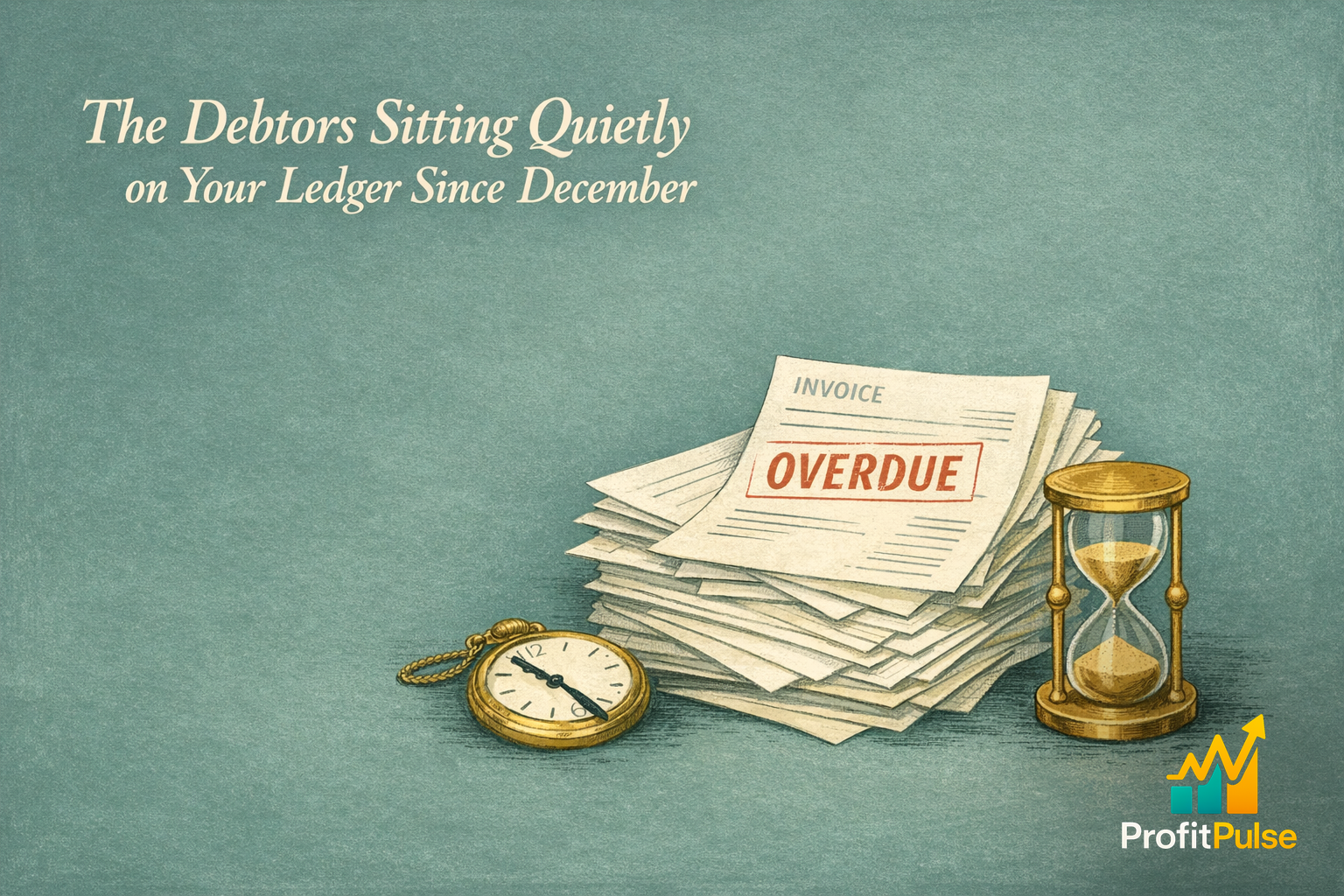
The debtors sitting quietly on your ledger since December
Invoices issued before the break often slip weeks past terms. Late January is the moment to chase them before they age further and become harder to collect.
Invoices issued before the break often slip weeks past terms. Late January is the moment to chase them before they age further and become harder to collect.

Resilience in an owner led business comes from a deliberate cash buffer sized to its own seasonality, not a vague sense of having enough money in the account.
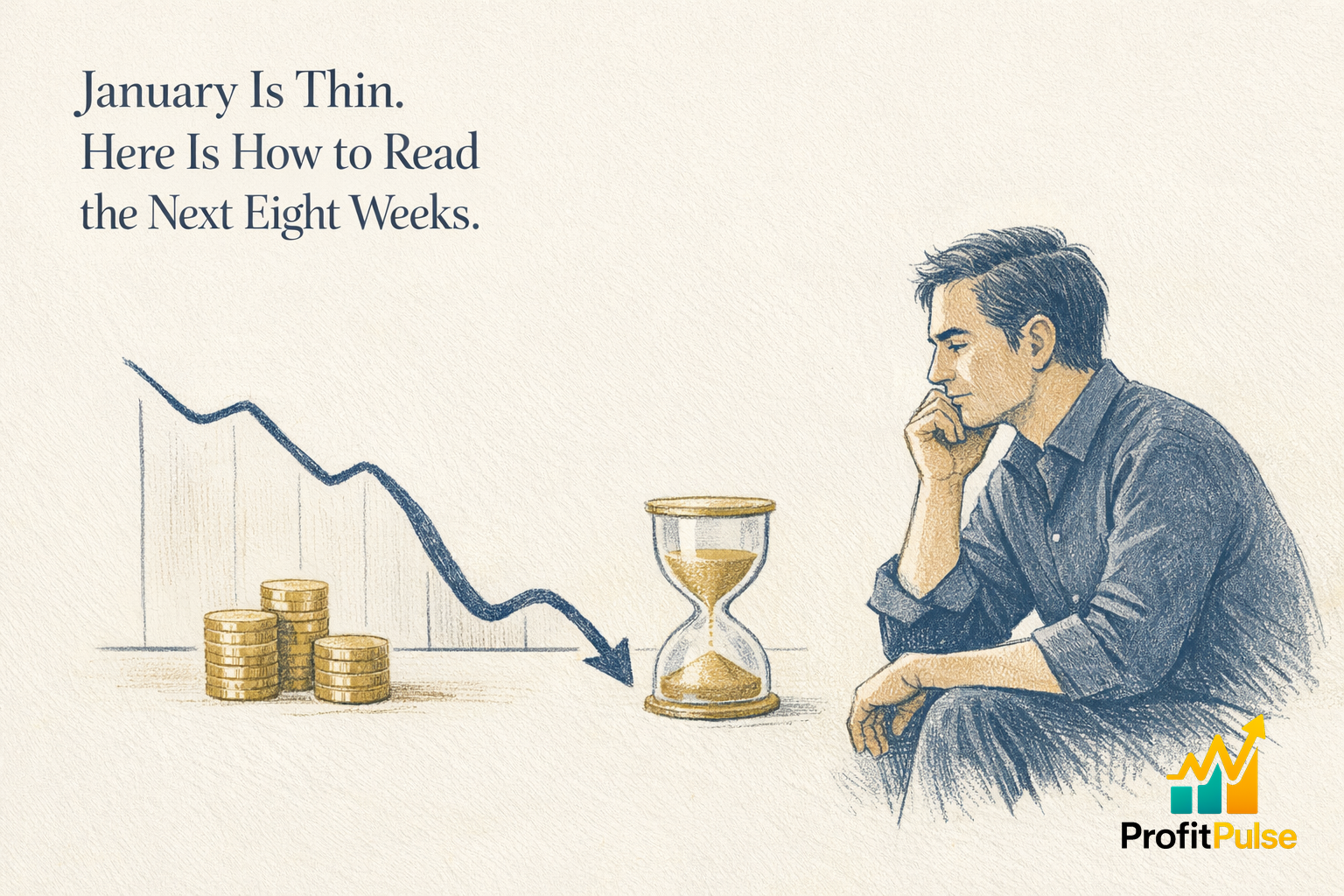
The slowest trading weeks of the year are exactly when a forward cash view matters most. Fixed costs keep running while revenue lags, so read the trough early.

The shutdown period drains cash while revenue stops. A simple plan for committed payments against expected receipts is the difference between a calm break and a January scramble.

Before you switch off for the year, you need a clear answer to one question: what will the bank balance look like in early January when wages and rent fall due against thin trading?

An invoice left open in late November often sits unpaid until February. The weeks before the December shutdown are the best chance to clear the ledger and protect January cash.
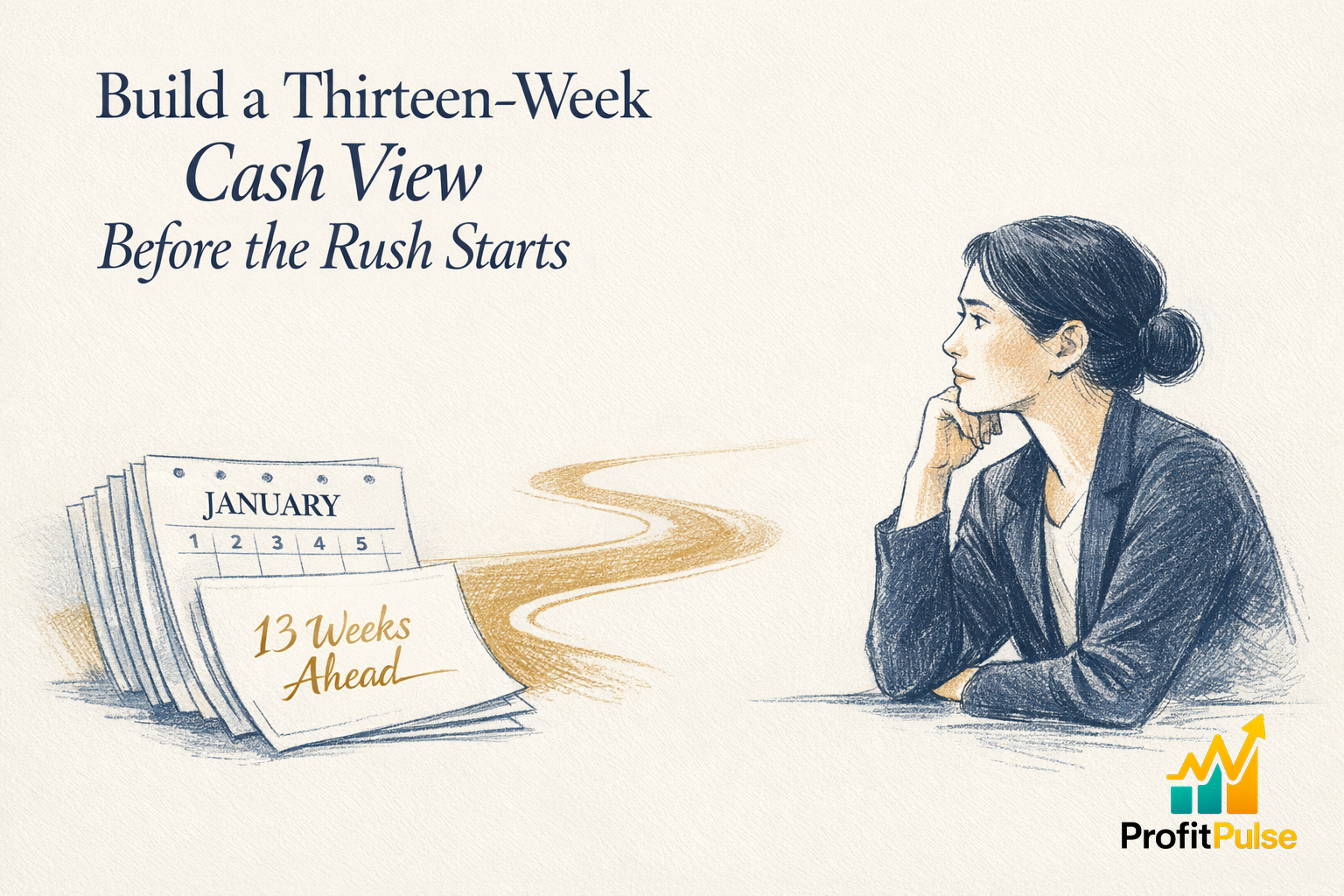
November is the right time to stand up a rolling thirteen week cash forecast, so you can see January's thin trading clearly before it arrives rather than feel it once it does.

Ordering Christmas stock in October ties up cash for weeks before any of it sells. Most owners never model the gap between paying the supplier and being paid by the customer.

The cash you carry into December is mostly decided in October, before the trading rush distorts everything. Build the forward view now so peak season does not arrive as a shock.