
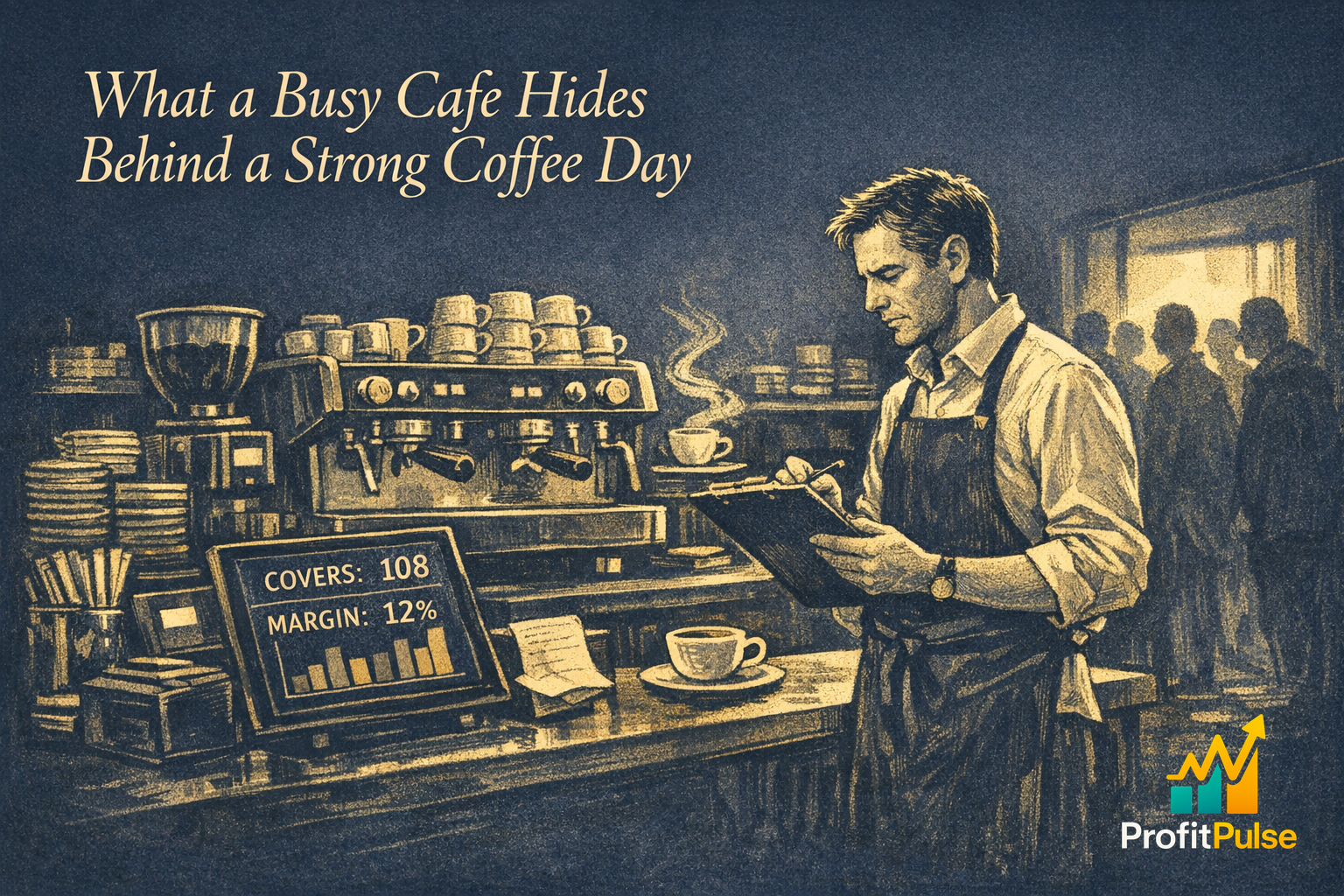
International Coffee Day tends to bring a strong trading day for cafes, and the queue feels like confirmation that everything is working. The till is busy, the team is flat out, and the day ends with a satisfying sense of momentum. The trouble is that a busy day and a profitable day are not the same thing, and the gap between them is where a lot of good cafes quietly lose ground.
A packed room can still bleed margin if the price of a flat white has not moved while beans, milk and wages have. The queue distracts from the maths. In our experience, the cafes that hold their margin through a strong spring are the ones reading two or three numbers carefully rather than judging the day by how it felt on the floor.
The queue lies, the numbers do not
Most cafe owners can tell you their covers and their average spend per head without thinking. Fewer can tell you their food cost percentage this month versus last quarter, or where their wage-to-revenue ratio sat during a busy Saturday compared with a quiet Tuesday. Those are the numbers that decide whether a strong coffee day actually banks anything.
Food cost percentage drifts upward slowly, which is exactly why it is dangerous. A dairy supplier lifts the price of milk, the roaster passes through a small increase on beans, and the menu price stays put because changing it feels risky. None of those moves is dramatic on its own. Together they can pull three or four points off a margin that was already thin, and a busy day simply multiplies the leak across more covers. The same drift hides inside portioning and waste, where a slightly heavy hand on the milk jug or a tray of unsold pastries at close costs almost nothing on any single day and a meaningful sum across a quarter. None of it shows up on the busiest morning, because the busiest morning feels like proof that the model works.
Read labour against trading hours, not against the day
The other number worth watching is the wage-to-revenue ratio measured against actual trading patterns rather than the day as a whole. A cafe can run a healthy ratio across a full week and still carry an expensive hour at the front and back of each day when the room is empty but the team is rostered on. Those hours do not show up when you average everything out, but they show up clearly in the cash position by the end of the month.
This is not about cutting hours blindly. It is about matching the roster to the covers the data actually shows, then deciding which quiet trading hours earn their keep through reputation, regulars or the morning rush they set up. A cafe that opens at six to catch the tradie run may find that the first forty minutes lose money on their own but build the loyalty that fills the eight o’clock peak. That is a fair trade once you can see it. The problem is only ever the hour you are paying for without having decided to. Once you can see the pattern, the decision is yours to make with confidence rather than guesswork.
Menu engineering is a pricing decision, not a design one
Menu engineering gets treated as a layout exercise, where the best sellers go top right and the high-margin items get a box around them. That helps at the edges, but the bigger lever is knowing the true margin on every line and the average spend per head it drives. A coffee with a strong margin and a pastry with a weak one can sit side by side on the counter while one carries the other, and most owners have never separated the two.
A Cost & Margin Deep Dive works through each line the same way, producing a clear view of which items earn their place and which are quietly subsidised by the rest of the menu. Pair that with steady cash habits, and the picture sharpens. We have written more about that rhythm in our notes on cash flow discipline, which matters as much for a cafe heading into the Christmas build-up as the menu does.
Turn the numbers into a weekly habit, not a yearly reckoning
The cafes that stay ahead of the drift are not the ones with the most sophisticated systems. They are the ones who look at the same handful of numbers every week, in ten quiet minutes after the Sunday close. Covers, average spend per head, food cost percentage and wage-to-revenue ratio against trading hours tell you almost everything about whether the week banked or just felt good. Read weekly, a two-point creep in food cost or a slow Tuesday that has stopped paying its way is obvious while it is still small and cheap to correct. Read once a year at tax time, the same drift has already cost a season of margin, and it lands as a nasty surprise rather than a small adjustment. Your bookkeeper keeps the ledger accurate, which is exactly their job; turning those figures into a weekly commercial read is a different task, and it is the one that protects the margin.
None of this takes the romance out of running a good cafe. It just means the strong days actually count. If you run a cafe in Brisbane and the trade feels good but the bank balance does not reflect it, the answer is almost always sitting in numbers you already collect. ProfitPulse helps owners read them clearly, so the busy days finally translate into the result they should.
Frequently asked questions
What is a healthy food cost percentage for a cafe in Australia?
Most cafes aim to keep food and beverage cost in the high twenties to mid thirties as a percentage of sales, though the right number depends on your menu mix and format. The figure matters less than the trend. If it has crept up two or three points while your prices stayed flat, that is the signal worth acting on. A Cost & Margin Deep Dive can show you where the drift is hiding.
Why does my cafe feel busy but still run low on cash?
A full room only converts to cash when the margin on each cover holds and the wage hours match the trade. Busy days can mask rising input costs and expensive quiet hours that average out across the week. The volume feels reassuring while the margin thins underneath it. Reading food cost percentage and your wage-to-revenue ratio against actual trading hours usually surfaces the gap quickly.
How often should a cafe review its menu prices?
At least twice a year, and any time a key input like milk, beans or wages moves noticeably. Prices tend to lag costs because changing them feels risky, so the review is best run on a calendar rather than left to instinct. Heading into the Christmas build-up is a sensible checkpoint. The point is to make a deliberate decision rather than letting margin erode by default through a busy spring.
What numbers should a cafe owner track every week?
Covers, average spend per head, food cost percentage and wage-to-revenue ratio cover most of what decides profit. Tracked weekly, they show you whether a strong trading run is actually banking or just feeling good on the floor. Our notes on cash flow discipline explain how to turn those numbers into a steady weekly rhythm rather than a once-a-quarter scramble.
Is menu engineering worth doing for a small cafe?
Yes, though the real value is in knowing the true margin on each line rather than just rearranging the layout. A small cafe often has a handful of items quietly subsidising the rest, and separating them changes how you price and promote. It does not require a big system. A clear-eyed look at margin per item and the spend per head each one drives is usually enough to shift the result.
Can a cafe in Brisbane improve margin without raising prices?
Often, yes. Tightening food cost percentage, matching rosters to real trading patterns and reworking the menu mix can lift margin before a single price moves. Price is one lever, not the only one. For cafes in Brisbane heading into a busy summer, the quiet wins in cost and labour usually come first, with pricing as a considered step rather than a reflex.
Leave a Reply