
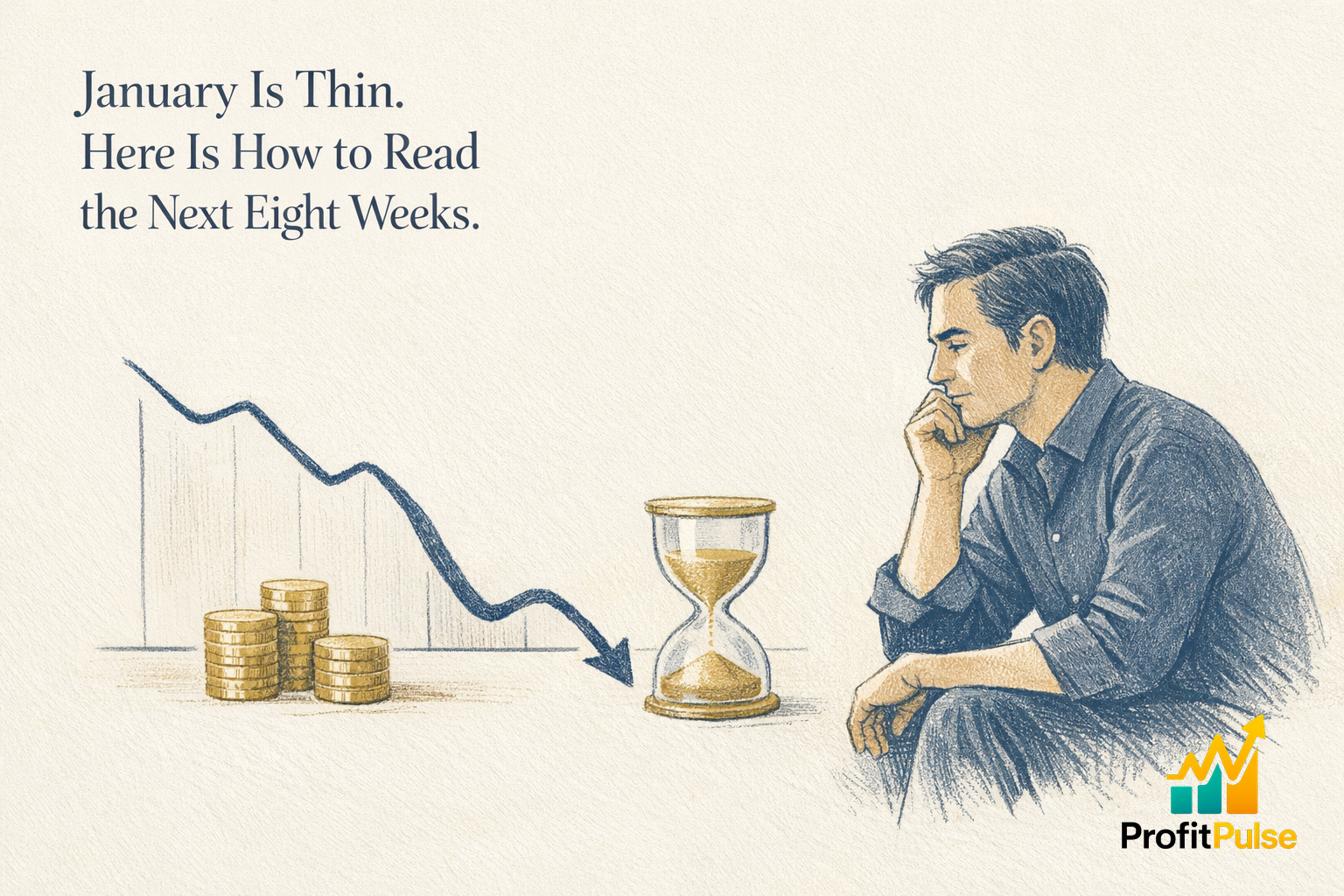
The first weeks of the year are quiet for a lot of Australian businesses. Customers are still away, decisions are paused, and invoices that would normally have been paid in December are sitting somewhere in a holiday inbox. Trading is thin, and it tends to stay thin into February.
The instinct, after a busy December and a break, is to coast for a few weeks and let things pick up. That instinct is reasonable, and it is also where the year’s first avoidable cash squeeze often begins. Revenue dips, but rent, wages, software, insurance and loan repayments do not pause to match. The gap between what comes in and what must go out is widest precisely when attention is lowest.
This is the part of the year where a clear forward view of cash earns its keep, not because anything is wrong, but because the trough is predictable and therefore manageable.
The quiet weeks are when timing risk is highest
Most owners read their cash position by glancing at the bank balance. In a normal trading month that works well enough, because money flows in steadily and refills the account as it drains. January breaks that rhythm. The balance can look comfortable in the first week and uncomfortable by the third, simply because the inflows that usually arrive are delayed while the outflows keep their schedule.
The risk is not insolvency for a healthy business. The risk is being forced into an avoidable decision, delaying a supplier you value, dipping into an overdraft you did not plan to touch, or pausing a hire you actually need, all because the trough arrived a fortnight earlier than the mind expected. None of that is necessary when the shape of the next eight weeks is visible in advance.
The cost of being surprised is rarely a single large event. It is a string of small concessions made under mild pressure: the early-payment discount missed because cash was tight that week, the supplier called to ask for a few more days when a steadier balance would never have needed to, the quarterly tax instalment that lands on exactly the wrong day because no one looked ahead far enough to see it coming. Each is minor on its own. Across a quiet season they add up to a worse result than the trading itself warranted, and all of it was avoidable with two hours of forward looking.
Read the trough, then protect the runway
Reading the trough means laying the next eight to twelve weeks out as a forward view: what is genuinely committed to arrive, dated honestly rather than optimistically, against everything that must be paid. The point is to find the low week, the moment the balance dips furthest, before it happens. Once you can see it, you have options. You might bring forward a collection, time a large payment to land after the dip, or simply confirm that the buffer carries you through and stop worrying about it.
The honesty about dates is the part that separates a useful forward view from a comforting one. An invoice with thirty-day terms issued just before the break may not really turn into cash until late February, however the system records it, because the customer who approves it has only just returned to their desk. Dating inflows to when the money genuinely arrives, rather than when it is theoretically due, is what makes the low week show up where it actually sits. A view built on optimistic dates hides the very dip it is meant to reveal, which is worse than no view at all because it carries false confidence.
This is the thinking behind a 13-Week Cash Flow Build, which lays out a rolling thirteen-week forward view from the accounting data, with a few scenarios so the picture holds even if a large customer pays late or an unexpected cost lands. The value is not the spreadsheet. It is knowing, in the first week of January, roughly where the business sits in the second week of March, and being able to act calmly rather than react under pressure.
The discipline behind this is not complicated, and it does not require new software or a finance team. It requires looking forward instead of backward, which is a habit more than a skill. Our note on cash flow discipline walks through how owners build that forward habit so the quiet season stops catching them out.
February is closer than it feels
The businesses that move through the January trough smoothly are rarely the ones with the most cash. They are the ones that saw the dip coming and made small adjustments early, while there was still room to make them. By the time the account is uncomfortably low, most of the easy moves have already passed.
The bookkeeping that records December’s activity is doing exactly what it should, telling you accurately what already happened. A forward cash view is a different job entirely. It looks at what is about to happen and gives you the chance to shape it. Both matter, and they answer different questions.
If the next eight weeks feel uncertain rather than planned, that is the signal to build the forward view now, while the trough is still ahead of you and there is time to act. Our insights on managing cash through seasonal dips are a practical starting point, and the work of reading the runway is one we do with owners every January.
Frequently asked questions
Why is cash flow tight in January for Australian businesses?
Trading slows while customers are still away, and invoices from December often sit unpaid in holiday inboxes. Meanwhile rent, wages, software and loan repayments keep their schedule. The gap between delayed inflows and steady outflows is widest in the first weeks of the year. It is predictable, which means a forward cash view can turn a stressful squeeze into a managed one.
How far ahead should I forecast cash flow in the new year?
Eight to twelve weeks is the practical window for reading the January trough, far enough to see the low point before it arrives and act while there is still room. A rolling thirteen-week view keeps that horizon refreshed as weeks pass. Our note on cash flow discipline explains how to build the forward habit so quiet seasons stop catching you out.
What is a 13-week cash flow forecast and how does it help?
It is a rolling forward view of cash, built from your accounting data, showing what is committed to arrive against what must be paid over the next thirteen weeks, usually with a few scenarios. The value is seeing the low week before it lands, so you can bring forward a collection or time a payment. A 13-Week Cash Flow Build sets this up and hands over the cadence to run it.
Why is the bank balance a poor guide to cash in January?
In a normal month, steady inflows refill the account as it drains, so the balance roughly tracks your position. January breaks that rhythm. Inflows are delayed while outflows keep their schedule, so the balance can look comfortable one week and tight the next for no underlying reason. A forward view, rather than a glance at the account, is what shows where you actually stand.
How do I protect cash through the slow start to the year?
Find the low week before it arrives, then act early while options remain. You might bring a collection forward, time a large payment to land after the dip, or confirm the buffer carries you through. The businesses that move through January smoothly are rarely the ones with the most cash. They are the ones that saw the trough coming and made small adjustments while there was still room.
Does a cash flow forecast replace what my bookkeeper does?
No, the two answer different questions. Your bookkeeper records what already happened, accurately and completely, which is exactly what compliance and reporting require. A forward cash view looks at what is about to happen and gives you the chance to shape it. Both matter. One tells you where you have been, the other helps you decide what to do next.
Leave a Reply