
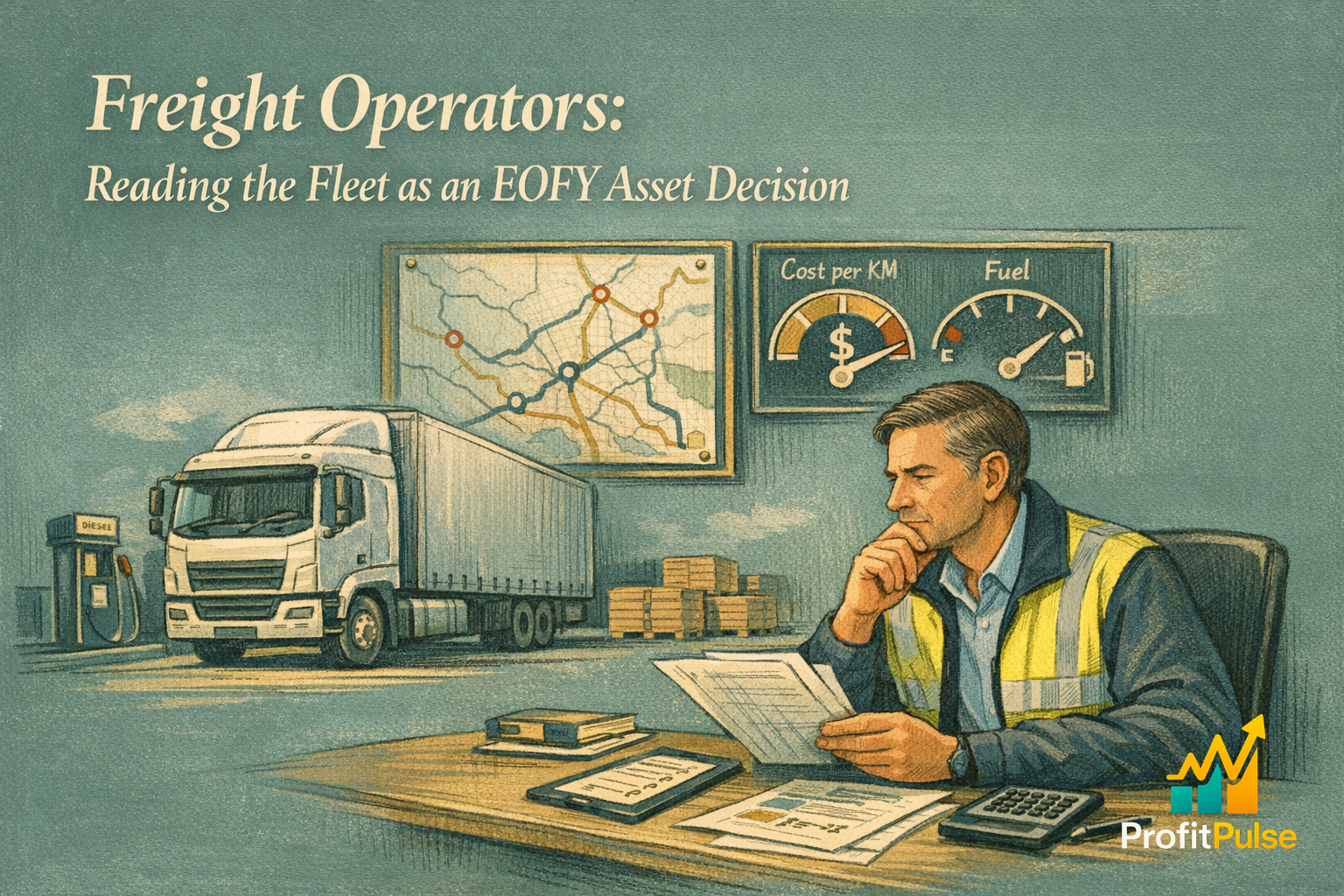
For a freight operator, the fleet is the business. It is also the largest pool of capital sitting on the balance sheet, and the run to year-end is when decisions about it tend to get made fastest and thought about least. A truck reaches a certain age, a finance deal looks attractive before June, an accountant mentions a write-off, and a six-figure asset decision gets made on a feeling rather than a number.
The pressure is understandable. Across Queensland, fuel cost, maintenance and driver availability all push operators to keep the fleet modern, and the calendar adds its own urgency as the financial year closes. But fleet replacement made on habit or on the date rather than on return is one of the more expensive patterns we see in the industry.
Replace on economics, not on age
The instinct to replace a vehicle once it hits a certain age is understandable, but age is a poor signal on its own. The number that matters is what each vehicle costs to run against what it earns. A truck with high kilometres can still be the cheapest unit in the fleet if its maintenance is predictable and its asset utilisation is high. A newer truck sitting idle or running half-empty lanes can be the most expensive thing you own.
Reading this properly means knowing cost per kilometre by vehicle, not as a fleet average. The average hides the truck that is quietly eating margin and the one that is carrying the business. Replacement decisions made on real cost per kilometre, rather than on the odometer, tend to keep more capital working and less tied up in metal that flatters the yard but not the result. The same logic applies to which lanes a truck runs. A vehicle earning strong revenue per kilometre on a dependable route is a different proposition from the same model running light or empty legs, even though the registration says they are the same age.
Fleet financing is a return decision, not a tax one
Year-end brings a particular temptation. A finance deal or a write-off can make a purchase feel almost free, and the timing before June sharpens that feeling. The danger is letting the tax treatment lead the decision. Depreciation and write-offs change the timing of a cost. They do not change whether the asset earns its keep over its working life.
The honest question is whether the vehicle, financed at its real rate over its real term, generates a return above what that capital would do elsewhere in the business. Fleet financing that looks cheap on the brochure can be expensive once the full term and residual are in front of you. This is the discipline behind a Capital Allocation Review, which weighs each major asset against the return it actually produces rather than the tax outcome it offers this June. A balloon payment, a residual that has to be refinanced, an interest rate that resets, each of these changes the real cost of the truck and none of them shows up in the headline that makes the deal feel urgent before the year closes.
It helps to picture two trucks side by side. One is three years old, sits idle two days a week, and runs lanes that barely cover its costs. The other is seven years old, runs full and dependable routes, and earns well above what it costs to keep on the road. On age alone, an operator would replace the older truck first. On economics, the older one is the keeper and the younger one is the question. Reading the fleet this way, vehicle by vehicle rather than as a single pool, is what stops year-end pressure from pushing capital toward the asset that looks newest rather than the one that earns least. The deadline rewards a quick decision; the numbers reward the right one.
Time the decision to the year, not the deadline
The strongest position is to know your fleet replacement plan before year-end pressure arrives, not because of it. An operator who has mapped which vehicles to replace, when, and on what financing, can take a genuine end-of-year deal when it suits the plan and ignore one that does not. An operator deciding in the final fortnight is at the mercy of whatever offer happens to be in front of them.
This is the same thinking that runs through our wider commercial insights: capital decisions made early and on the numbers, not late and on the deadline. Freight operators across Queensland who plan their fleet this way find that year-end deals become something they choose rather than something they are cornered into. If your fleet is your largest asset and your replacement decisions are made in the last weeks of June, the year is leading the fleet rather than the other way around. ProfitPulse helps freight operators read fleet economics clearly, so the asset and financing calls made this year build the business rather than just the depreciation schedule.
Frequently asked questions
When should a freight operator replace a truck?
Replace on economics, not on age. The signal is cost per kilometre against what the vehicle earns, read by individual truck rather than as a fleet average. A high-kilometre unit with predictable maintenance and strong asset utilisation can be your cheapest. A newer truck running idle or half-empty lanes can be your most expensive. Knowing the real cost per vehicle, not the odometer reading, keeps more capital working in the business.
Should I buy a truck before EOFY for the tax write-off?
Only if the vehicle earns its keep on its own merits. A write-off changes the timing of a cost, not whether the asset produces a return over its working life. Letting the tax treatment lead a six-figure decision is one of the more expensive habits in the industry. Weigh the purchase, financed at its real rate and term, against what that capital would earn elsewhere. A Capital Allocation Review makes that comparison explicit.
How do I work out the true cost per kilometre of each vehicle?
Read cost per kilometre by vehicle, not as a fleet average. Pull each truck’s fuel, maintenance, financing and downtime against the kilometres and revenue it actually generates. The average hides both the unit quietly eating margin and the one carrying the business. Once you can see each vehicle separately, replacement and financing decisions sharpen considerably, because you are acting on the truck that is genuinely underperforming rather than a number that blends everything together.
Is fleet financing a tax decision or a return decision?
A return decision first. Depreciation and write-offs affect when a cost is recognised, not whether the asset is worth owning. A finance deal that looks cheap on the brochure can be expensive once the full term and residual are in front of you. The question that matters is whether the vehicle generates a return above what that capital would do elsewhere in the business, financed at its real rate over its real term.
How can a Queensland freight business plan fleet replacement before June?
Map which vehicles to replace, when and on what financing, before year-end pressure arrives. With that plan in hand you can take a genuine end-of-year deal when it suits and ignore one that does not. Operators deciding in the final fortnight are at the mercy of whatever offer is in front of them. Reading fleet economics early sits alongside the broader capital thinking in our commercial insights.
Why does fleet utilisation matter more than fleet age?
Because a vehicle only earns when it is moving freight that pays. A newer truck sitting idle or running light lanes ties up capital without producing return, while an older, well-used unit can be the most productive asset you own. Asset utilisation tells you which vehicles are working and which are decoration in the yard. Read alongside cost per kilometre, it gives a truer basis for replacement than the year on the registration.
Leave a Reply