
With World Health Day fresh in mind this week, it is worth looking at the commercial side of dental care, because a clinic that is busy and a clinic that is profitable are not always the same thing. Most practice owners read the appointment book as their main signal of health. A full diary feels like a good week. The trouble is that a full book and a profitable chair are different measurements, and the gap between them is where a surprising amount of margin quietly disappears.
A dental chair is a fixed asset with a fixed cost. The surgery, the equipment, the assistant and the clinical time all cost the same whether the chair is producing high-value treatment or running through low-yield appointments. That means the question is not whether the chair is busy. It is what the chair is producing while it is busy.
Production per chair is the number that matters
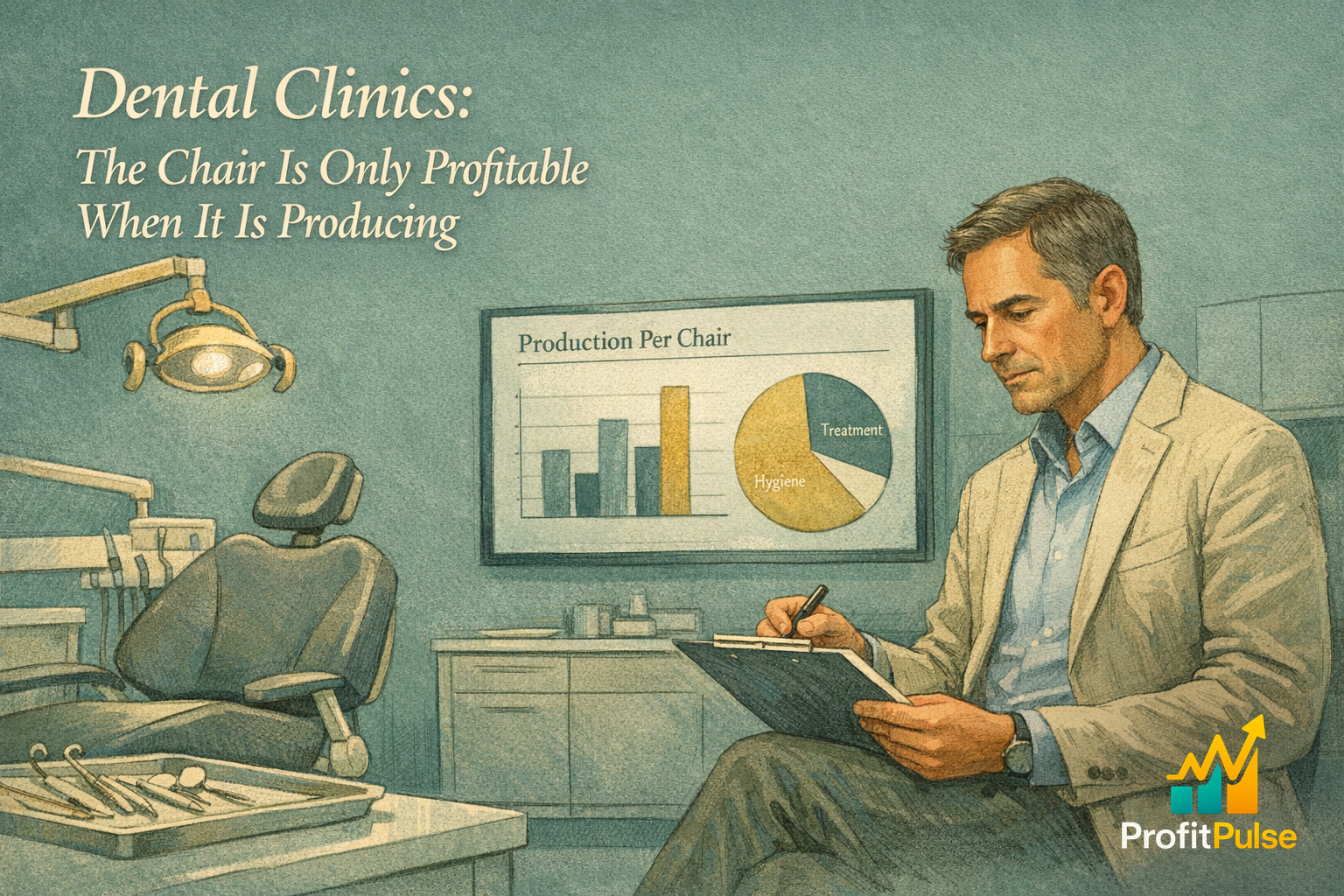
Production per chair, the revenue a single chair generates per clinical hour or per day, cuts through the noise of a full diary. Two clinics can have identical booking levels and very different results, because one is filling chair time with productive treatment and the other is filling it with appointments that barely cover the cost of the room. When chair utilisation is high but production per chair is low, the practice is working hard for a thin return.
This is where the treatment mix does its quiet work. A book heavy on short, low-value visits keeps everyone busy without lifting the result, while a book with the right balance of treatment and hygiene produces far more from the same hours. The aim is not to chase only high-value work, which is neither clinical nor sustainable, but to understand the blend and make sure chair time is allocated to match.
The other half of production per chair is the gap left by cancellations and failed appointments. A chair that sits empty for a no-show in the middle of the day is producing nothing while still carrying its full cost, and across a month those gaps add up to real lost capacity. Practices that watch this closely build a short-notice list to fill cancellations, confirm appointments well in advance, and look honestly at which appointment types fail most often. Recovering even a portion of that lost chair time lifts production without a single new patient walking through the door.
Hygiene and case acceptance are the two levers underneath
Hygiene revenue is often underread in a practice’s economics. A well-run hygiene programme keeps patients engaged, funds the chair efficiently and feeds treatment work downstream, yet it is frequently treated as an afterthought rather than a deliberate part of the production model. Looked at properly, hygiene is both a margin contributor in its own right and the engine that keeps the treatment pipeline full.
Case acceptance rate is the other lever, and it is the one most directly within the practice’s control. The same diagnosis presented and discussed well, with the patient understanding the value and the options, converts to accepted treatment at a very different rate than one rushed through. Lifting case acceptance does not require more patients or more chairs. It lifts production from the patients already sitting in them. Understanding how clinical hours convert into revenue and margin is exactly what a Workforce Capacity & Utilisation Review is built to surface for a practice.
Case acceptance also has a downstream effect that rarely gets credited. A patient who understands and accepts a treatment plan is far more likely to attend the follow-up appointments that plan requires, which fills future chair time with already-committed work rather than uncertain new demand. Treatment that is presented well does not only convert once; it schedules a sequence of productive visits. That is why the conversation in the chair is a commercial lever as much as a clinical one, and why the practices that invest time in it tend to have steadier, more predictable books.
Reading the chair like a financial asset
The practices that run well treat each chair as a financial asset with a return to manage, not just a clinical space to fill. They watch production per chair, they understand their treatment mix, they run hygiene deliberately, and they invest in the case acceptance conversation. The result is a clinic that earns more without simply seeing more patients, which protects both the margin and the clinical team from the burnout that comes with chasing volume.
For dental owners across the Gold Coast and wider South East Queensland, the opportunity heading into the final quarter is rarely about filling the book further. It is about producing more from the chairs already running. There is more on this kind of capacity and margin thinking across our insights library, and the shift from measuring how busy you are to measuring what the chair produces is usually the one that changes the result.
Frequently asked questions
Why is my dental practice busy but not very profitable?
A full appointment book and a profitable chair are different measurements. The chair costs the same whether it produces high-value treatment or low-yield visits, so what matters is production per chair, not how full the diary looks. When utilisation is high but production per chair is low, the practice works hard for a thin return. A Workforce Capacity & Utilisation Review shows how clinical hours convert into revenue and margin.
What is production per chair in a dental practice?
It is the revenue a single chair generates per clinical hour or per day. It cuts through the noise of a full diary, because two clinics can have identical booking levels and very different results depending on what fills the chair time. One is producing valuable treatment, the other is running appointments that barely cover the cost of the room. Tracking production per chair tells you which situation you are actually in.
How does treatment mix affect dental clinic profitability?
The blend of treatment and hygiene work decides how much the same chair hours produce. A book heavy on short, low-value visits keeps everyone busy without lifting the result, while a balanced mix produces far more from identical hours. The aim is not to chase only high-value work, which is neither clinical nor sustainable, but to understand the blend and allocate chair time to match it deliberately.
How can a dental clinic improve its case acceptance rate?
Case acceptance is the lever most within a practice’s control. The same diagnosis converts at very different rates depending on how it is presented and discussed, so the gain comes from giving patients the time to understand the value and options rather than rushing the conversation. Lifting acceptance does not need more patients or more chairs; it produces more from the patients already in them. You can read more in our insights library.
Why is hygiene revenue important for a dental practice?
Hygiene is often underread in a practice’s economics. A well-run hygiene programme is a margin contributor in its own right, keeps patients engaged, funds the chair efficiently and feeds treatment work downstream. Treated as an afterthought it leaks value; treated as a deliberate part of the production model it becomes the engine that keeps the treatment pipeline full and the chair producing consistently.
How do dental practices on the Gold Coast lift margin without more patients?
The opportunity is usually producing more from the chairs already running rather than filling the book further. That means watching production per chair, understanding treatment mix, running hygiene deliberately and investing in the case acceptance conversation. Practices across the Gold Coast that make this shift earn more without simply seeing more patients, which protects both the margin and the clinical team from volume-driven burnout.
Leave a Reply