
November is when ambition and cash pressure meet. Orders are building, the team is stretched, and the plan for next year is taking shape on a whiteboard somewhere. Somewhere in that energy, an owner starts asking how to fund the next stage, and the first idea that surfaces is often the most expensive one.
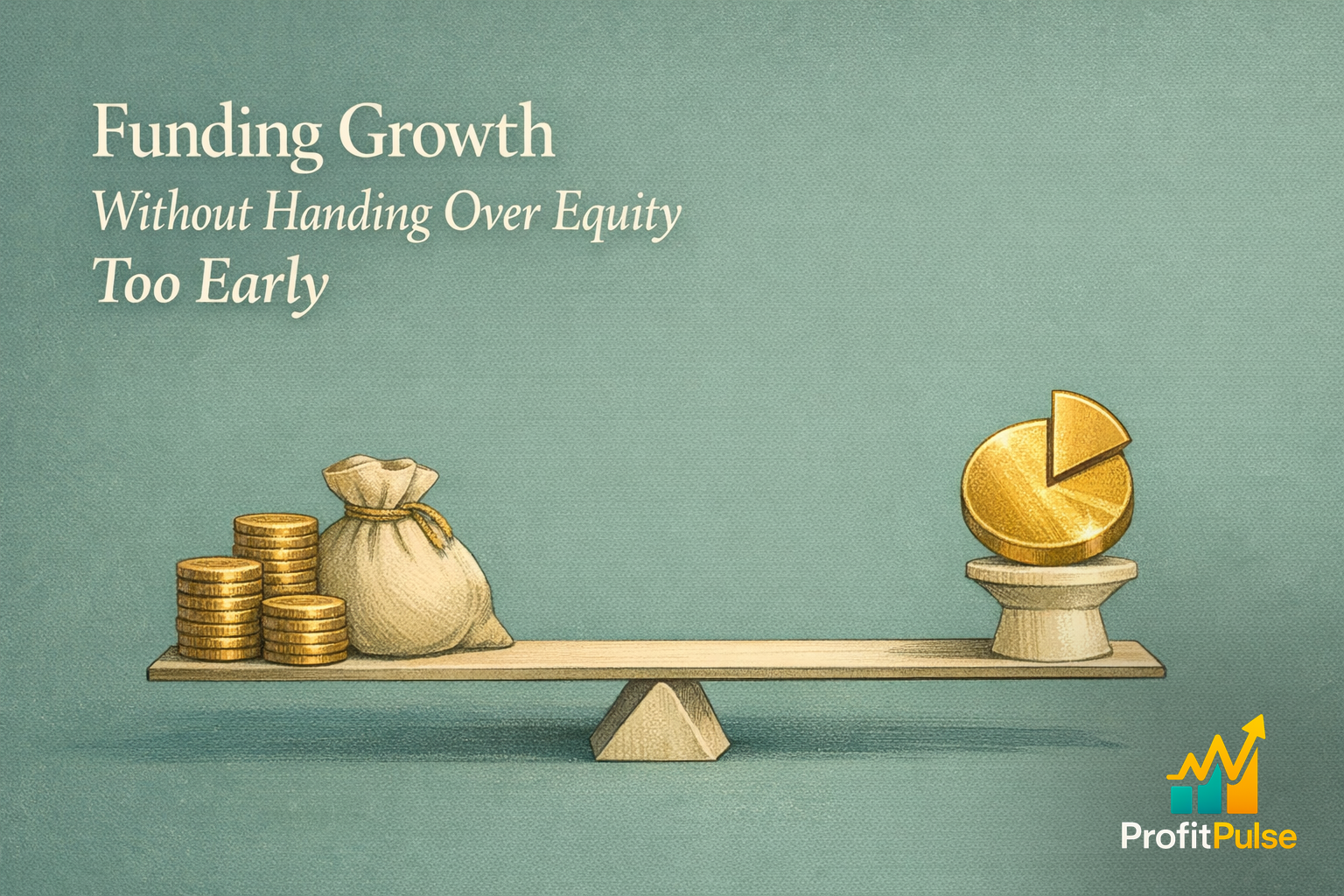
Selling a slice of the business feels decisive. It brings money in without a repayment schedule and it brings a name to the cap table. What it also does, quietly, is give away a permanent share of every future dollar of profit and every future dollar of sale price. That trade can be the right one. It is rarely the right one when the real need is a few months of working capital to get through a peak.
The pattern we see across owner-led businesses is not that equity is wrong. It is that equity gets chosen before the cheaper options have been properly priced.
Match the instrument to the need, not the mood
The size and shape of the funding gap should decide the instrument, not how confident the room feels. A short, seasonal gap caused by stock and wages landing before revenue is a working capital problem. It is usually solved with an overdraft, a trade facility, or simply better terms with the suppliers and customers you already have. Handing over equity to cover a timing mismatch is paying a lifetime price for a ninety-day problem.
Debt suits a need that is finite, has a clear repayment source, and earns more than it costs. A piece of equipment that lifts capacity, a fit-out that lifts revenue, a bulk stock buy at a real discount. These have a return you can model, which is exactly what a lender wants to see. Equity belongs to the parts of growth that are genuinely uncertain and long-dated, where there is no fixed repayment a bank would accept and where the upside is large enough to share.
Getting that judgement right before peak season is the whole point. Once the floor fills up and the diary is full, the decision gets made under pressure, and pressure favours whatever is fastest rather than whatever is cheapest. The instrument chosen in a calm November holds up far better than the one grabbed in a frantic December.
The cost of capital is rarely the headline rate
Owners tend to compare funding options on the obvious number, the interest rate on the debt or the percentage of equity given up. The real comparison runs deeper. Debt carries a repayment that must be serviced from cash, so it constrains the months where cash is already tight, but its cost is finite and ends when the loan is repaid. Equity carries no monthly repayment, which feels lighter, but its cost compounds for as long as you own the business and crystallises in full at sale. A facility that looks dearer on the rate can be far cheaper across the life of the business than a stake handed over early.
Better supplier and customer terms sit underneath both, and cost almost nothing. Much of what owners treat as a funding gap is really a timing mismatch between when cash leaves for stock and wages and when it returns from customers. Tightening collections, staging supplier payments, and negotiating terms can release enough working capital to cover a seasonal peak before any external funding is needed at all.
Know what you are worth before anyone asks
Equity raised early is equity raised cheaply for the investor and expensively for you. A business worth a certain multiple today will, if the plan works, be worth considerably more in two years. Selling a stake now locks in today’s lower number. The same capital raised eighteen months later, against stronger numbers, costs far less in ownership.
This is where a clear read on the options pays for itself. A capital raise decision sits on top of a question many owners have not yet answered, which is what the business is actually worth and what a funder would reasonably pay for a stake or lend against. Working that out first changes the conversation from hopeful to grounded. Our guide to preparing for a raise walks through the order these decisions belong in.
Be ready before the timing forces your hand
The owners who fund growth well are not the ones with the best pitch. They are the ones who decided the instrument before the season demanded an answer. A Capital Raise Feasibility assessment exists for exactly this moment, testing whether the business is ready to raise at all, which instrument fits, and what investors or lenders will realistically pay. It is as useful for ruling equity out as for ruling it in.
The same logic holds wherever you trade, from Brisbane to Melbourne, because the question is structural, not regional. Readiness also matters once you do decide to bring outside money in, which is why owners often look at what investors expect to see long before they need it.
If you are weighing how to fund the next stage, ProfitPulse helps owners price every option side by side, so the choice is made on numbers rather than on the first idea in the room.
Frequently asked questions
When should a growing business use debt instead of equity?
Debt suits funding needs that are finite, have a clear repayment source, and earn more than they cost, such as equipment, a revenue-lifting fit-out, or a discounted stock buy. Equity belongs to long-dated, genuinely uncertain growth where no fixed repayment fits. If the need is a seasonal timing gap, a working capital facility or better terms usually beats giving away ownership. Our capital raise guide sets out how to choose.
Why is raising equity early often more expensive than it looks?
Equity raised before your numbers strengthen is priced against today’s lower valuation, so you give away a larger share for the same money. If the plan works, the business is worth considerably more in eighteen months, and the same capital then costs far less in ownership. The cost is not interest you can see, it is a permanent share of every future profit and the eventual sale price.
What is a Capital Raise Feasibility assessment for an Australian SME?
It is a structured review of whether the business is actually ready to raise, which instrument fits, and what lenders or investors will realistically pay or accept. It is as valuable for ruling equity out as for confirming it. The aim is to make the decision on evidence before peak-season pressure forces a fast, costly answer. You can read more on the capital raise service page.
Can better supplier and customer terms reduce the need to raise?
Often, yes. A large part of what owners treat as a funding gap is really a timing mismatch between when cash goes out for stock and wages and when it comes back in from customers. Tightening payment terms, staging supplier payments, and improving collections can release enough working capital to cover a seasonal peak without taking on debt or selling a stake at all.
Should I know my business valuation before approaching investors?
Yes. Walking into a raise without a defensible view of value puts you in a weak position, because the investor will anchor the conversation to their number. Knowing what the business is reasonably worth, and what drives that figure up or down, lets you negotiate from evidence. Many owners look at what investors expect to see well before they plan to raise.
Is November a good time to make funding decisions for next year?
It can be, provided the thinking happens before the season peaks. November planning energy is useful, but once the floor fills up the funding decision tends to get made under pressure, and pressure favours the fastest option rather than the cheapest. Settling the instrument now, while there is room to compare debt, equity and working capital properly, is the advantage.
Leave a Reply