
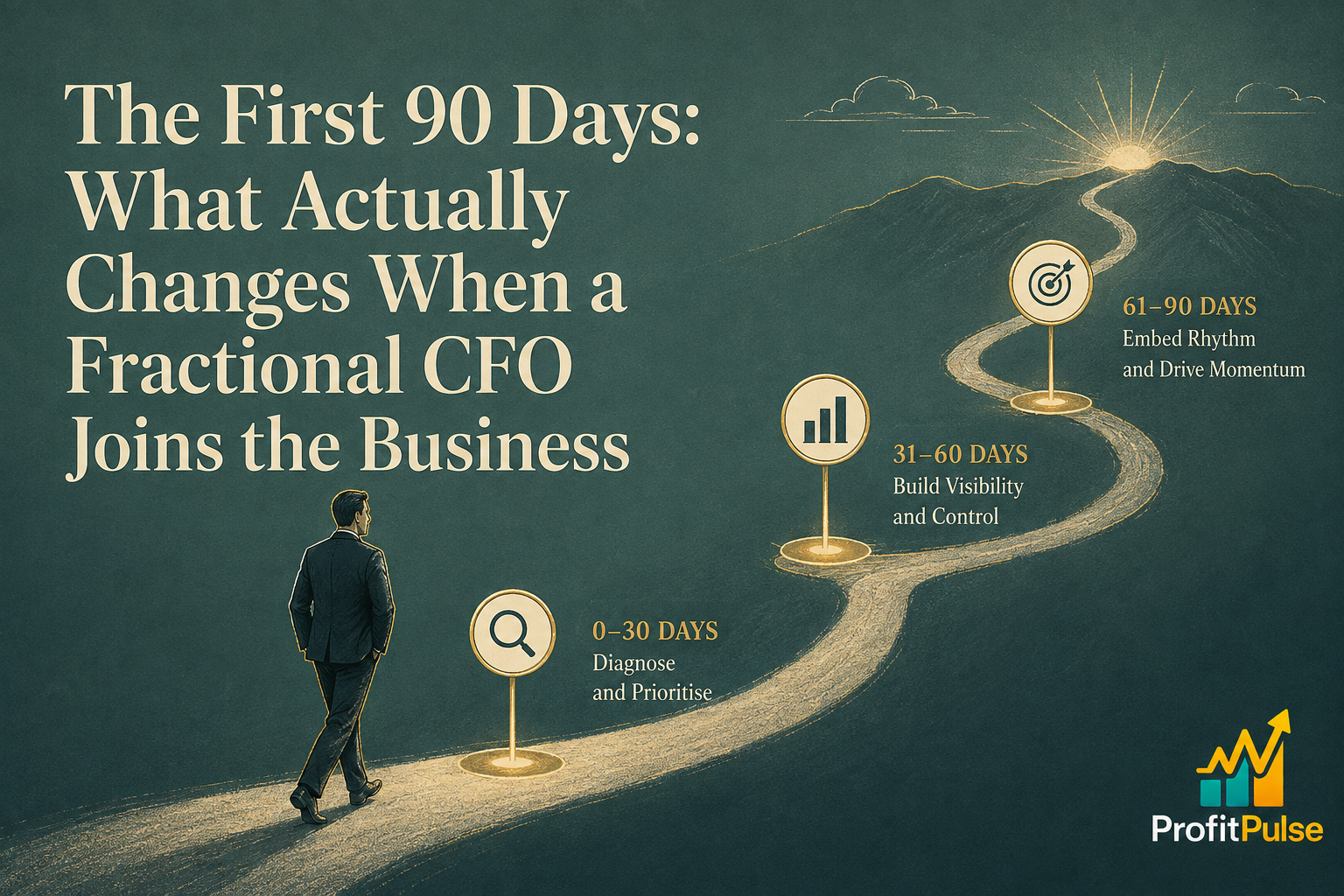
Ask most business owners what they expect in the first week of working with a fractional CFO and the answer is usually the same: a fresh set of eyes, a sharp opinion, and a plan. That expectation makes sense. It is also not how the first ninety days actually unfold, and the businesses that get the most out of the partnership are usually the ones who understand the shape of it before they start.
The pattern we see across owner-led businesses is a steadier build than the fantasy version. Understanding comes before opinion. Visibility comes before rhythm. And the value that shows up by day ninety looks less like one big insight and more like a business that finally has numbers everyone in the room can trust, from the owner through to the bank.
Weeks One to Three: Understanding Before Opinion
The first few weeks are not spent fixing anything. They are spent understanding how the business actually makes and loses money, which is a different exercise to reading the financial statements. A proper diagnostic works back through the last twelve months of trading, not to produce a verdict, but to build a picture of where margin is genuinely being made, where it is quietly leaking, and which parts of the business carry more risk than the profit and loss statement suggests. This is the same discipline behind a Profit Pulse Check, and it matters because most owners are working from instinct that was accurate two or three years ago and has not been re-tested since.
Nothing gets recommended yet at this stage. A fractional CFO who proposes solutions in week two is skipping the step that makes every later recommendation defensible. It is also the stage where the working relationship gets tested, because a genuinely useful diagnostic asks uncomfortable questions about customer concentration, pricing history and where cash actually sits, rather than confirming what the owner already believes.
Weeks Four to Eight: Numbers Everyone Can Trust
Once the diagnostic is done, the work shifts to visibility. This is where a rolling cash flow forecast gets built, where reporting gets tightened into something that actually reflects trading reality, and where the numbers an owner sees each month start to match the numbers a bank, a board, or a future buyer would want to see. None of this replaces the work a bookkeeper or BAS agent already does well. It sits on top of that work, turning compliant, accurate ledgers into a forward-looking view the business can actually plan against. Owners who have never had proper cash flow discipline in place often describe this stage as the first time they have felt ahead of the business rather than behind it.
This is also usually where the first real friction shows up, not with the numbers themselves but with what they reveal. A customer that looked profitable on revenue alone often looks different once effort to serve is factored in, and a pricing structure that felt fair two years ago often has not kept pace with cost. None of that is a failure on anyone’s part. It is simply what happens when a business grows faster than its financial visibility.
By Day Ninety: The Rhythm That Sticks
By around day ninety, the value stops being about any single deliverable and starts being about rhythm. There is a monthly cadence in place. Decisions about pricing, hiring, or a new piece of equipment get tested against a forecast before they are made, not explained after the fact. A board pack, if there is one, reflects reality rather than optimism. This is the point where a fractional CFO partnership starts to earn its keep, because the relationship has moved from diagnosis to genuine financial leadership.
What the First Ninety Days Isn’t
It isn’t a takeover of the bookkeeping function, and it isn’t a guarantee of instant cost cutting. It also isn’t a straight line. Some weeks are spent almost entirely on data cleanup, reconciling how the business actually tracks its numbers against how it thinks it does, and that groundwork rarely feels exciting from the outside. The businesses that get the most out of the arrangement are the ones that treat the first quarter as a build phase rather than a rescue, and give the process the time it actually needs to produce numbers worth acting on.
If you are weighing up whether now is the right moment to bring a fractional CFO into an Australian SME, it helps to know what the first ninety days genuinely involves before you start, not after. What a fractional CFO actually does becomes a lot clearer once you have watched the arc from diagnostic to rhythm play out.
Frequently asked questions
What actually happens in the first three weeks with a fractional CFO?
The first three weeks are diagnostic, not advisory. A fractional CFO works back through roughly twelve months of trading to see where margin is genuinely made and where it leaks, before any recommendations are made. It is the same groundwork behind a Profit Pulse Check, and it protects the business from advice built on an outdated instinct rather than current numbers.
How is a fractional CFO different from a bookkeeper or BAS agent?
A bookkeeper or BAS agent keeps the ledger accurate and the lodgements compliant, which is essential and separate work. A fractional CFO sits on top of that, turning accurate numbers into forward-looking decisions about pricing, cash and growth. Neither role replaces the other, and the two typically work well together across the engagement, each focused on a different layer of the business.
How much does a fractional CFO cost for an Australian SME?
Cost depends on the tier of involvement, ranging from a monthly management pack through to weekly leadership and lender conversations. Rather than a single figure, the fairest answer sits in a range explained on the fractional CFO cost guide, which breaks down what typically drives the price up or down.
How often does a fractional CFO meet with the business each month?
It varies by tier. Some businesses need a structured monthly management pack and review, others need weekly involvement in leadership or lender conversations during a busier stretch. The right cadence is set by the complexity of the business, not a fixed rule, and is worth discussing directly through the fractional CFO partnership page.
What size business in Queensland typically brings in a fractional CFO?
Most engagements sit with businesses turning over one million to thirty million dollars a year, once the owner is making decisions too complex for a spreadsheet but the business is not yet ready to justify a full-time CFO salary. Revenue is a rough guide only; the real trigger is usually decision complexity outpacing financial visibility.
Does a fractional CFO replace the accountant who lodges the tax return?
No, and it is not meant to. The compliance accountant, bookkeeper or BAS agent continues doing exactly what they should be doing, which is keeping the business legitimate and lodgements current with the ATO. A fractional CFO adds a separate commercial and strategic layer on top, focused on forward decisions rather than historical lodgements, and the two roles work alongside each other.
When should a growing business bring in a fractional CFO rather than wait?
The pattern we see is that businesses wait until a decision has already gone wrong, a cash surprise, a pricing miscalculation, a stalled raise, before engaging. Bringing a fractional CFO in earlier, while the business is still stable, is what actually produces the ninety day build described above rather than a rescue.
Leave a Reply