Between the Monthly Meetings: What a Fractional CFO Actually Does
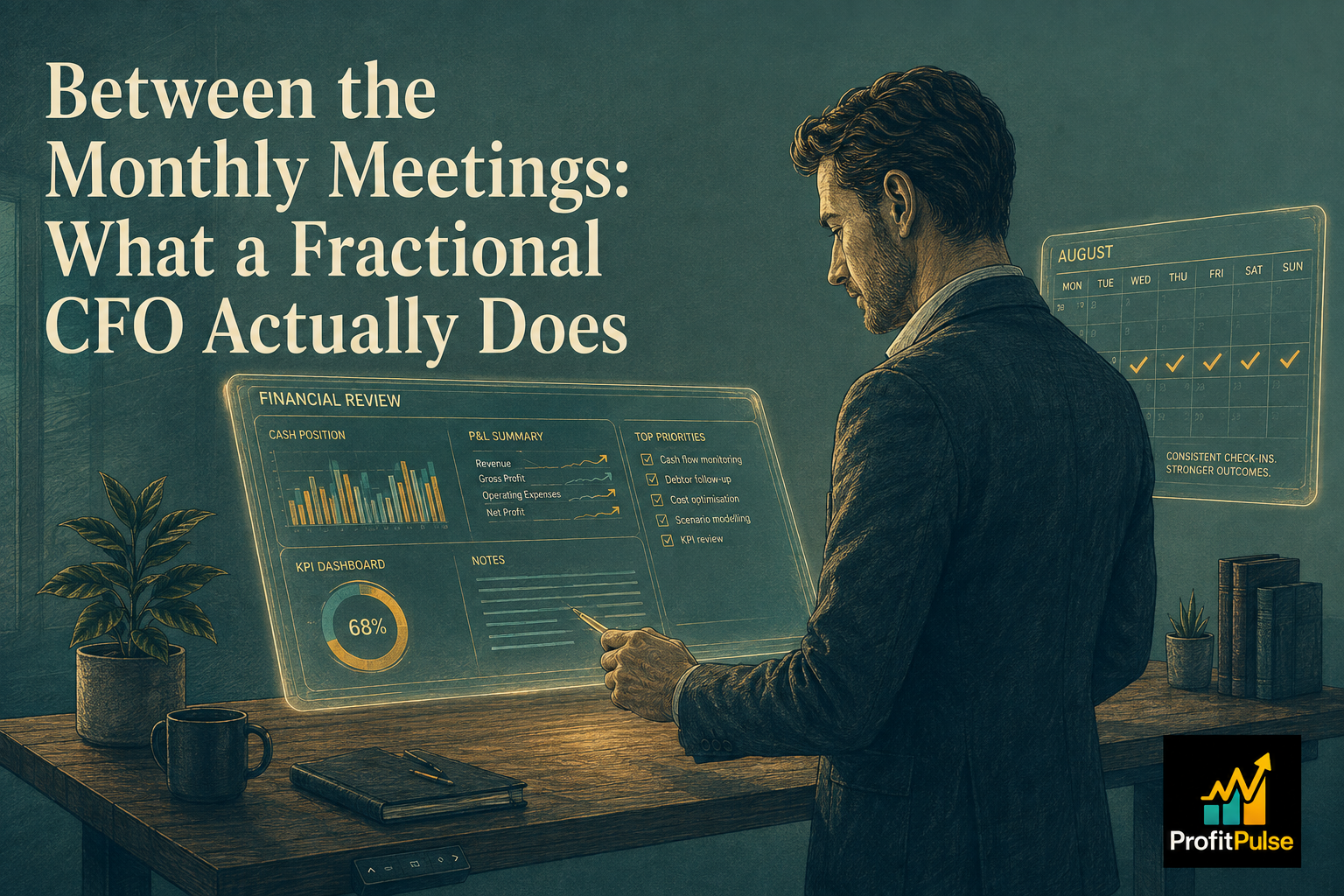
Most owners judge a fractional CFO by the monthly meeting. The real work, and the real value, happens in the weeks in between. Here is what actually fills that gap.

Most owners judge a fractional CFO by the monthly meeting. The real work, and the real value, happens in the weeks in between. Here is what actually fills that gap.

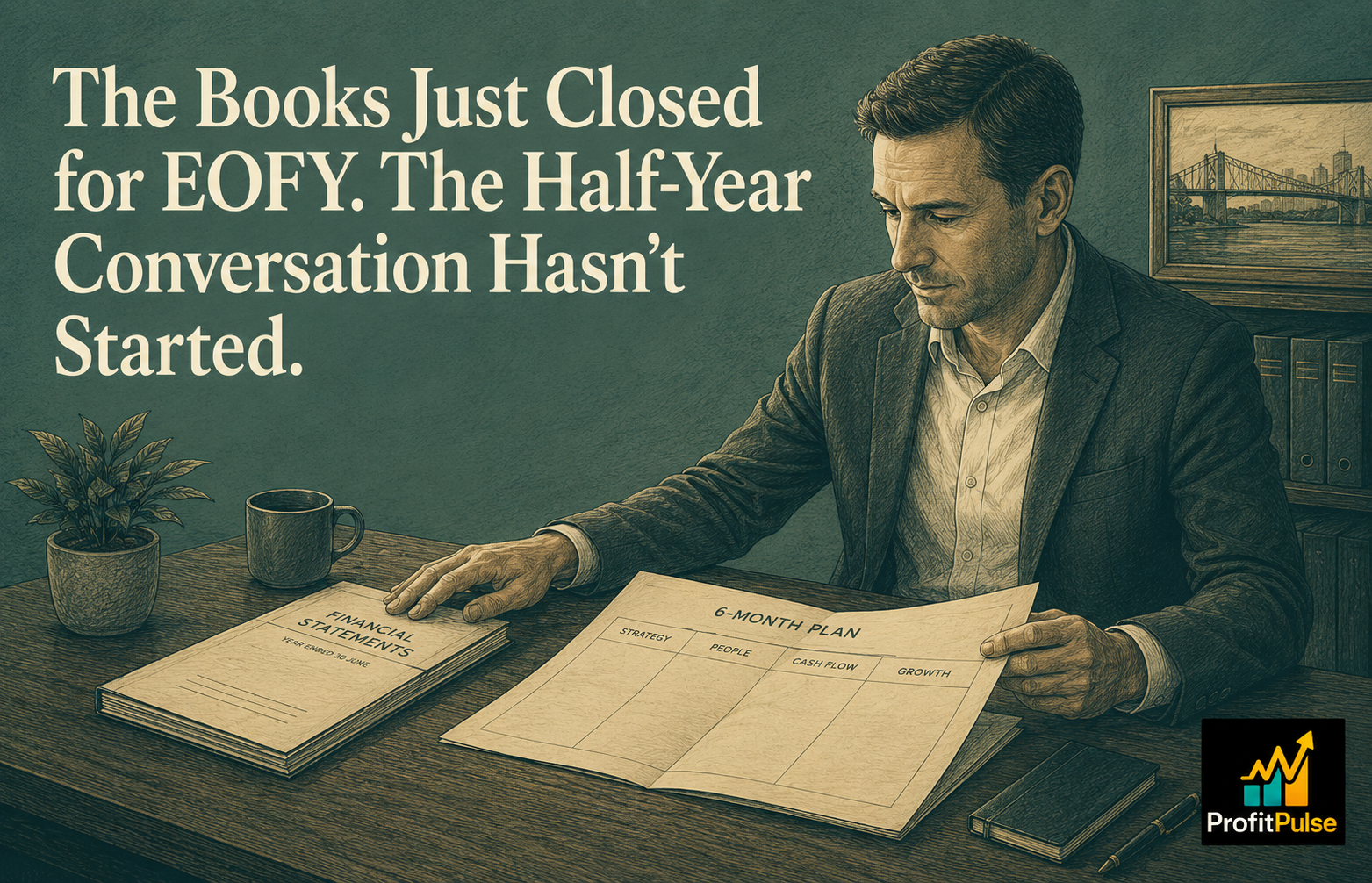
EOFY closes the books on FY26, but for most owner-led businesses the numbers stop there. Here is the half-year conversation that should follow, and why it rarely happens without someone owning it.

Accurate books and decision-ready numbers are not the same thing. Most owner-led businesses only notice the gap once a decision goes wrong and the reason turns out to be information, not judgement.

July 1 opens a fresh financial year for every Australian SME. Most owner-led businesses start it without a budget, a cash forecast, or a monthly reporting rhythm. That setup happens later, or not at all.

June 30 closes the books on FY26. Your accountant handles the compliance layer. This post is about the commercial review that sits alongside it and why the timing matters.

Most business owners who eventually engage a fractional CFO say they waited too long. The hesitation is usually about revenue size, but the real triggers look quite different and arrive earlier than expected.

Owners who enter the final weeks of the financial year with a senior finance partner make EOFY a set of decisions rather than a last-minute rush. Here is what the calm actually looks like.

A disciplined quarterly review, variance against plan plus a short list of risks and opportunities, keeps a business steerable rather than reactive. It is the habit that separates planning from wishing.

Growth often pulls owners deeper into financial decisions they have no time for. Senior finance support is how they step back without losing control of the business.

Most management reporting drowns owners in numbers nobody uses. The value of a finance partner is distilling the few figures that drive decisions, so the monthly pack becomes a tool rather than an artefact.

The quiet start of the year is the best moment to install a monthly financial cadence, so the business runs on a rhythm for twelve months instead of reacting all year.

The most useful end-of-year habit is capturing the financial lessons of the year before the break, so January planning starts from real evidence rather than memory.

November planning energy is real, but a plan that runs on optimism alone rarely survives contact with the year. A senior finance partner turns ambition into a costed plan.

During Small Business Month, here is the practical shift owners feel when financial decisions move from gut feel to a monthly rhythm with a senior partner who has seen the pattern before.