
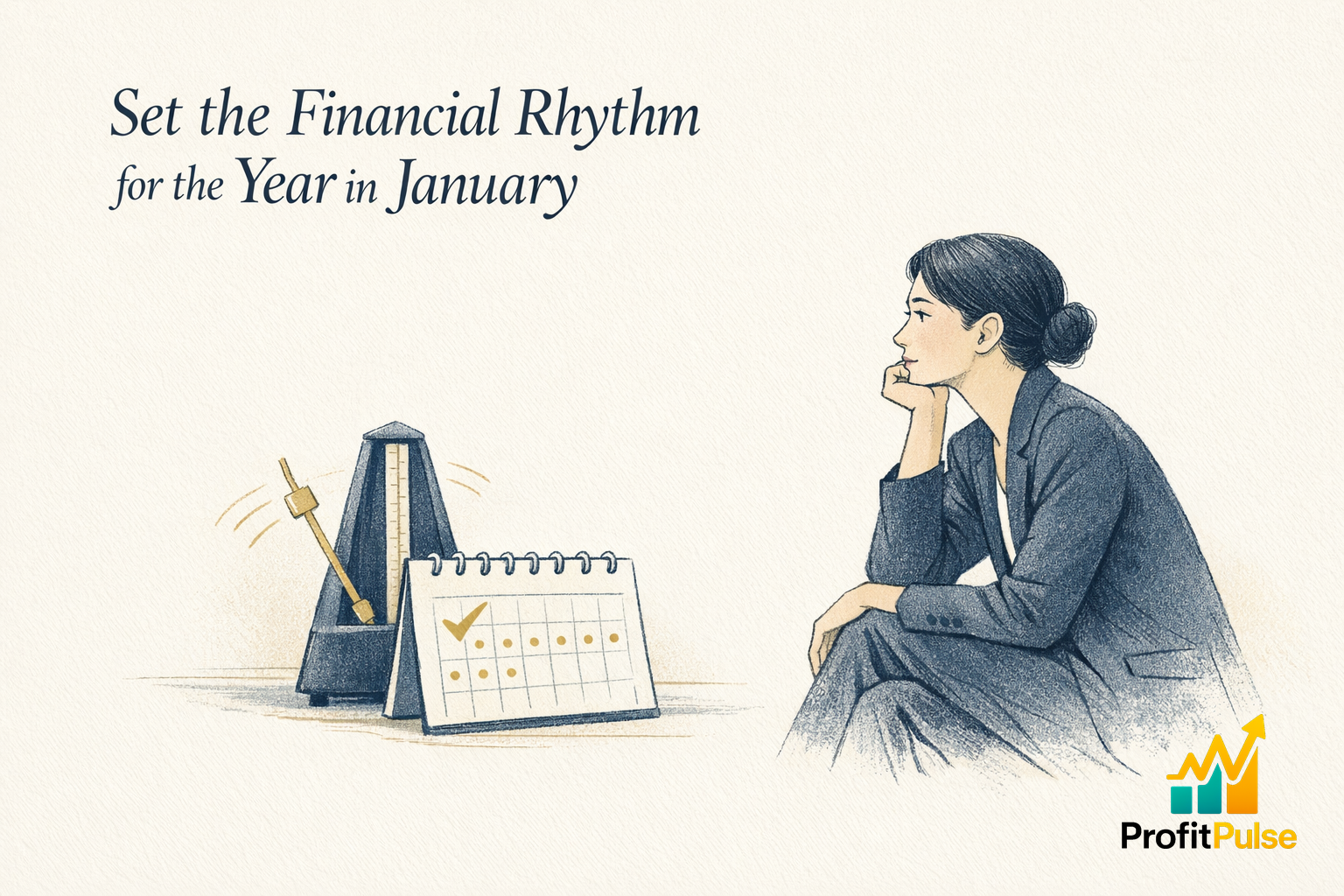
Most owner-led businesses run their finances reactively. The accounts get a serious look when something forces it: a tight cash month, a lender’s question, a tax deadline, a deal on the table. Between those moments, the numbers sit quietly in the accounting system, accurate and largely unread. The business runs on instinct and momentum, which carries it a long way, until the month it does not.
January is the natural moment to change that, because the change is easiest to make when the pressure is off. The diary is lighter, the inbox is calmer, and there is rare space to think about how the year should run rather than just running it. The decision worth making in that space is not a new strategy or a bold target. It is a rhythm: a regular, unglamorous cadence of looking at the right numbers and deciding what to do about them.
A rhythm beats a resolution
Year-ahead energy tends to produce ambitious lists, and ambitious lists tend to fade by March. A financial rhythm is different because it asks for very little and compounds steadily. The idea is simple. Once a month, the same numbers get reviewed against the plan, the variances get named, and a short list of decisions comes out the other side. That is the entire mechanism. Its power is in the repetition, not the ambition.
The reason this matters is timing. When the numbers are read monthly, a margin slipping or a cost creeping or a customer slowing their payments shows up while it is still small and still fixable. When the numbers are read only when something forces it, the same problems are discovered later, larger, and with fewer options left. The rhythm does not make an owner smarter. It makes them earlier, and earlier is usually enough.
What gets reviewed matters less than the fact that it happens at all, but a few numbers earn their place every month. The gross margin on the core work, because a slip of two or three points there outweighs almost anything else. The cost lines that tend to drift, the subscriptions, the casual labour, the freight that crept up without a decision being made. The few customers or jobs that carry most of the contribution, watched for any sign of softening. And the cash position read forward rather than backward. Five or six figures, looked at the same way each month, are enough to surface most of what an owner needs to act on before it hardens into a problem.
The cadence is the structure, not the spreadsheet
What makes a financial rhythm hold is having someone responsible for keeping it. Left to the press of daily operations, the monthly review is the first thing to slip, because there is always something more urgent than reading last month’s numbers. The cadence survives when it is owned, when the review is in the diary, the pack is prepared, and the conversation actually happens regardless of how busy the month was.
The first few months are where most attempts at a rhythm quietly fail. The review gets set up with good intentions in January, then the first genuinely hectic week arrives in March and it is the meeting that gets cancelled, because nothing breaks immediately when it does. By the time the consequences of skipping show up, the habit has already lapsed. A cadence that is owned by someone whose job is to keep it running, rather than by the owner who is also doing everything else, is far more likely to survive that first busy stretch and become the thing the year actually runs on.
This is the core of a Fractional CFO Partnership. A senior financial partner at the table on a recurring monthly basis, bringing the management pack, naming what the numbers are saying, and turning them into decisions. The value is partly the experience in the room and partly the simple fact that the rhythm now exists and keeps running. The numbers stop being something the owner gets to when they can, and become a steady input into how the business is run.
For owners weighing whether this fits their stage, our guide to what a fractional CFO does sets out the role in plain terms, and the companion note on how the cost works is honest about when the engagement earns its place and when it is too early.
Set it now and let it carry the year
The businesses that run on a financial rhythm tend to look calmer from the outside, and they usually are. Not because they have fewer problems, but because they meet their problems earlier, when there is still time to choose a response. The lender conversation is easier because the numbers are already in shape. The growth decision is clearer because the capacity and the cash are already understood. The surprises are smaller because most of them were seen coming.
None of that requires a transformation. It requires a cadence, set deliberately while the year is still quiet, and then kept. This collaborative, recurring financial leadership is the work we do alongside owners, and January is the easiest month of the year to begin it. If running on a rhythm rather than reacting appeals, the start of the year is the moment to set it. You can book a discovery call to talk it through.
Frequently asked questions
Why is January a good time to set a financial rhythm?
The change is easiest when the pressure is off, and early January is the quietest the diary gets. There is rare space to think about how the year should run rather than just running it. Installing a monthly cadence now means it is in place before the year’s demands build, so the business spends the next twelve months acting on its numbers rather than reacting when something forces a look.
What is a financial rhythm for a small business?
It is a regular monthly cadence: the same key numbers reviewed against the plan, the variances named, and a short list of decisions produced. The power is in the repetition rather than the ambition. Read monthly, a slipping margin or a creeping cost shows up while it is still small. Our guide to what a fractional CFO does explains how this cadence is built and kept.
How is a fractional CFO different from my accountant or bookkeeper?
Your bookkeeper and accountant keep the ledger accurate and the lodgements done, which is exactly what compliance requires. A fractional CFO works on the commercial layer above that, reading the numbers forward, naming what they mean for decisions, and keeping the monthly rhythm running. It is a different function, not a better one. A Fractional CFO Partnership sits alongside your existing accounting support rather than replacing it.
How often should an owner review the business numbers?
Monthly is the practical rhythm for most owner-led businesses. It is frequent enough that a problem is caught while it is small and fixable, and infrequent enough to stay sustainable through a busy year. The key is that the review actually happens whether the month was hectic or not, which is why having someone responsible for keeping the cadence matters more than the spreadsheet itself.
What does a fractional CFO partnership actually involve?
A senior financial partner at the table on a recurring monthly basis, preparing the management pack, naming what the numbers are saying, and turning them into decisions. Cadence and scope scale with the business, from a monthly review through to weekly involvement in lender and board conversations. Our note on how the cost works sets out when the engagement earns its place and when it is too early.
Will a monthly financial cadence really change how my business runs?
It changes the timing of your decisions, which is most of what matters. Businesses that run on a rhythm meet their problems earlier, when there is still time to choose a response, so they look calmer and usually are. The lender conversation is easier, the growth decision clearer, the surprises smaller. It does not require a transformation, only a cadence set deliberately and then kept.
Leave a Reply