Primary Producers: Reading the Books Before the Year Closes
Near World Bee Day, a look at why producers should turn a volatile season into clean year-end numbers that show true profit per enterprise, not just a tax position. Here is where to start.

Near World Bee Day, a look at why producers should turn a volatile season into clean year-end numbers that show true profit per enterprise, not just a tax position. Here is where to start.

On the Day of Families, a look at why family-owned manufacturers carry succession risk that quietly caps value, and how to reduce key-person dependence before EOFY conversations begin.

Aged care providers under funding scrutiny need reporting that stands up. Near Nurses Day, a look at linking occupancy, staffing and care costs to numbers funders and boards actually trust.

The run to year-end is when freight operators should weigh fleet replacement, financing and asset write-offs against return rather than habit. Here is how to read fleet economics before June.

Most professional services firms measure utilisation like it is the scoreboard. It is not the scoreboard. It should be seen as the temperature gauge.

On Labour Day, a look at why recruitment and labour hire businesses carry a built-in cash gap, and how to fund the wait between paying contractors and being paid by clients.

Vet practices often underprice the consult while diagnostics, surgery and retail subsidise it unevenly, masking where the margin really sits. How to read revenue and margin by service line.

Renewable installers ride strong demand while deposits, equipment costs and instalment timing create a working capital squeeze that growth makes worse. How to fund a growing pipeline without running dry.

Businesses trading across borders carry FX risk that can wipe out a quoted margin between order and payment. Few have a hedging policy worth the name. A simple treasury rhythm protects the margin.

Dental profitability is decided by production per chair and the mix of treatment versus hygiene, not by how full the appointment book looks. A busy diary and a profitable one are different things.

Construction businesses can run profitable jobs on paper while progress claims, retentions and subcontractor payments open cash gaps that sink the quarter. Profit and cash are not the same number.

Aged care operators run on funded rates that leave little room. The difference between viable and not sits in staff cost ratios, occupancy and the real cost of care per resident.

Technology businesses can buy revenue growth through spend while the unit economics, payback period and churn quietly decide whether the model actually works.

Wellness owners hit a capacity ceiling and must choose between more staff, more space or better use of what they have. The capital decision should be weighed against return.

Transport businesses track revenue per load while the cost per kilometre, fuel volatility and fleet financing quietly decide the margin. A full cost view changes the picture.

Producers often carry stale prices while materials, energy and freight have moved, eroding margin order by order. The fix is rebuilding prices from current input cost.

On World Engineering Day, a look at how fixed-fee engineering projects quietly lose money when scope creep and over-servicing go unmeasured against the original estimate.

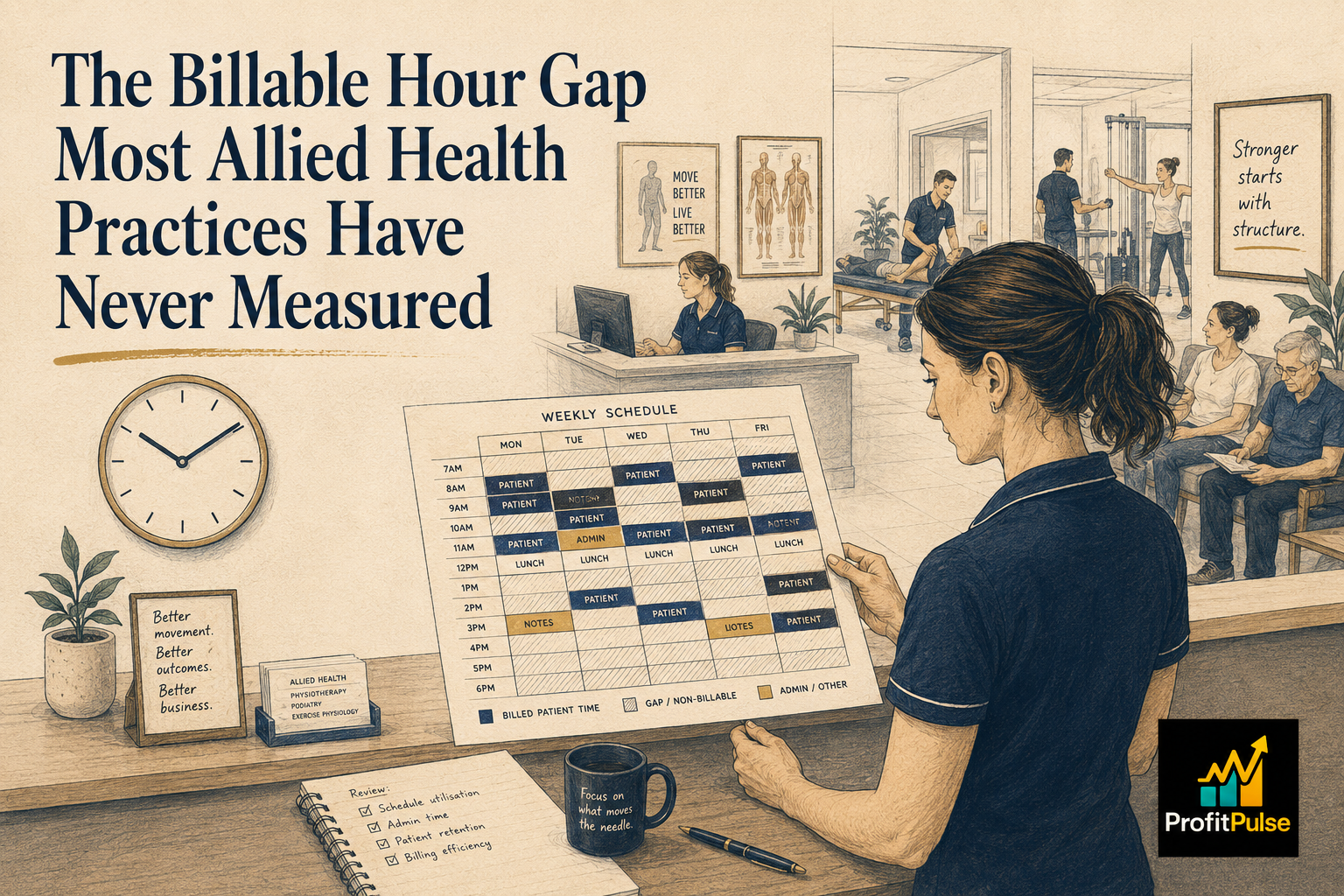
A full physio diary feels like a healthy practice, but the margin can stay thin when non-billable time, cancellations and a low-fee payor mix go unmeasured. Here is how to read billable ratio and lift profit per session.

Agencies live on lumpy sales commission, but the property management rent roll is the stable, valuable income they often underprice. Here is how to read the rent roll as both a cash anchor and a saleable asset.

Law firms lose profit in the space between time recorded, time billed and time collected. Partner economics hinge on closing it. Here is how to read realisation and lock-up so effort turns into cash.

A fully booked Valentine’s service feels like a win, but the margin is decided before the first table sits. Here is how restaurants protect food cost percentage on the high-demand nights that define February.

Around World Cancer Day, medical practices are full but often judge health by patient numbers. The real driver is revenue per consulting room against fixed clinical overhead. Here is how to read it.

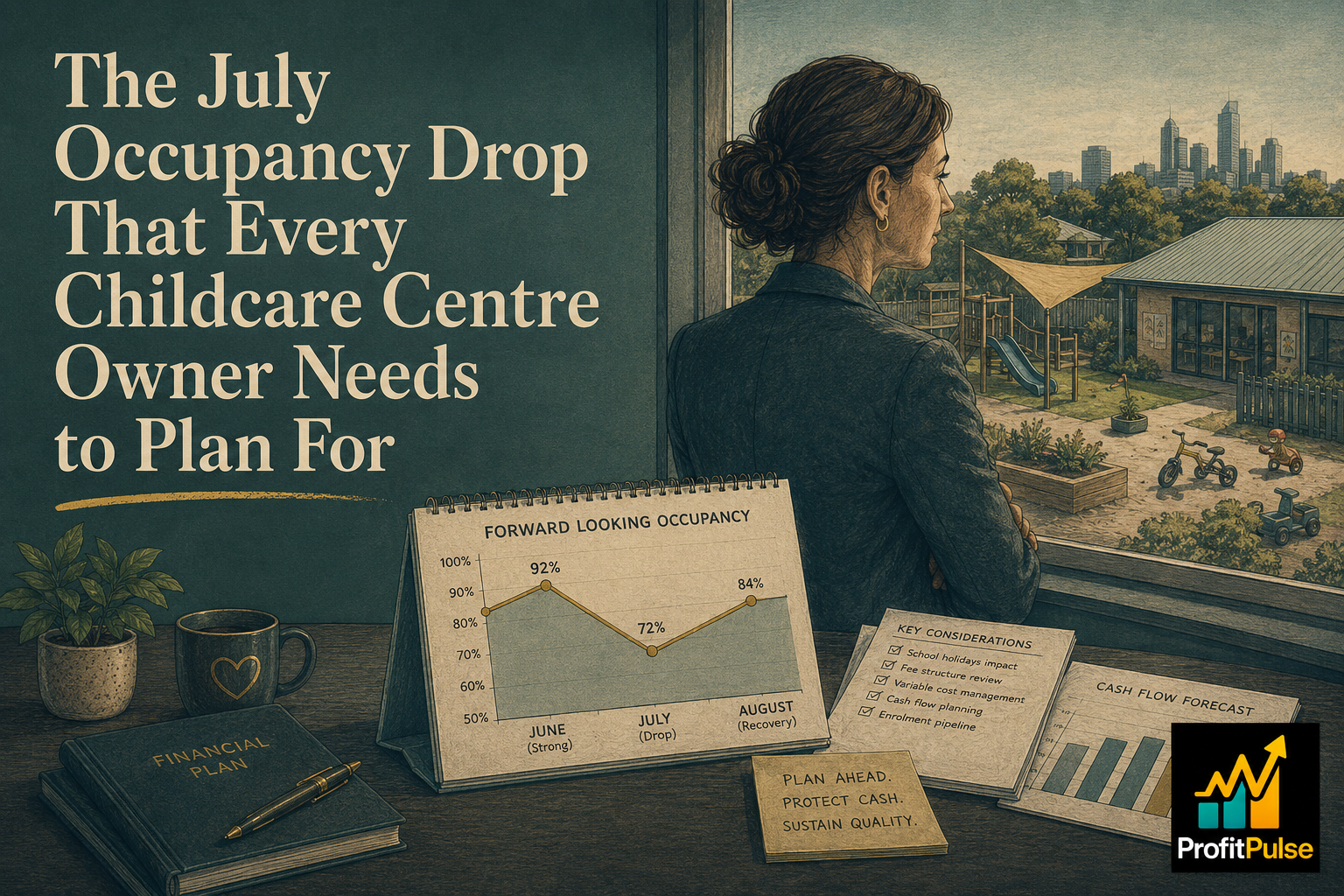
February fills childcare rooms after the back-to-school intake, and that is the first honest read on occupancy all year. Here is how to turn enrolment patterns into a revenue and roster plan.

Capital-heavy decisions on equipment and land are best made against expected return per hectare, not the confidence a good year leaves behind it.

Studios price memberships without measuring the cost of half-full sessions. Capacity per session is the lever between a busy timetable and a profitable one.