

Markup Is Not Margin: The Pricing Mix-Up Quietly Setting Your Prices Too Low
A 50 percent markup and a 50 percent margin are not the same number. The gap between them is quietly underpricing sales across owner-led businesses this trading season.
A 50 percent markup and a 50 percent margin are not the same number. The gap between them is quietly underpricing sales across owner-led businesses this trading season.

Wages climb before a new hire’s output does, and the margin dip that follows is one of the most predictable, and most misread, patterns in the lead-up to a business’s busiest trading quarter.

Three months into FY27, multiplying your quarterly profit by four feels like a forecast. It isn’t. Here’s what your Q1 number is actually telling you, and what it can’t.

Revenue looks fine this September, but margin is a notch lower and nothing obvious went wrong this month. Usually the real cause is two months old and sitting back in July.

Many owner-led P&Ls look healthy partly because the owner is paid well under market rate for the role. Here is what that gap hides, and why it changes pricing, hiring and growth decisions.

A blended gross margin can hold steady for months while individual product or service lines move in opposite directions underneath it. Here’s how that averaging hides real drift.

A step cost jumps once, when a vehicle, a shift or a bigger lease crosses a threshold. Revenue growth doesn’t always catch up as fast as owners expect, and the margin percentage hides it.

Revenue climbing again after EOFY feels like good news, but the next job on the calendar can quietly cost more to deliver than the last one did. Here is how to check before you say yes.

Adding a new product, service or package tier always feels like growth. Often it is just complexity, and complexity has a cost that never shows up on its own line.

A discount handed out once to keep a customer happy rarely stays a one-off. Here is how small, undocumented concessions quietly reset your pricing and erode margin all year.

Revenue softens for a few weeks and gross margin still looks fine on paper, yet net profit quietly falls. The reason sits in your fixed costs, not your pricing.

Award wage reviews, insurance renewals and rent increases all land around 1 July, quietly shifting your break-even revenue while pricing stays exactly where it was last June.

The FWC wage increase has moved your payroll cost from July 1. Whether it compresses your margin or gets recovered depends on a ratio most owners track as a dollar amount rather than a percentage.

July’s first P&L shows whether the budget’s assumptions held when the year hit reality. Reading it in July, while room to respond still exists, is what separates businesses that manage the year from ones that report it.

Most owners have a rough sense of what a price increase would do. Very few have run the exact arithmetic. The calculation for a $2m to $10m business often produces a number that changes how the new year gets planned.

Most owner-led businesses close June 30 knowing what the year delivered. Far fewer enter July with a clear profit target and the cost structure to support it for the twelve months ahead.

Gross margin percentage is the number that tells you whether revenue growth is making the business more profitable or quietly eroding it. For most Australian SMEs, EOFY is when the drift finally becomes visible.

Revenue and profit are not the same number. Most owner-led businesses find their most profitable customers are rarely their biggest ones. June is the right moment to find out which is which.

The weeks before year-end are the right time to rank cost lines and service margins so the new financial year starts with a clear improvement plan, not just a tax exercise. Here is how.

Some customers cost more to serve than they pay. The discipline to let them go can lift profit more than winning new work. Here is how to find the loss-makers hiding inside healthy revenue.

A careful price increase is the fastest lever on profit and far less risky than owners fear, when it is built on customer profitability and value rather than a flat percentage.

By early autumn the financial year has shown enough to test your plan against reality. A structured variance review now beats guessing your way through to June.
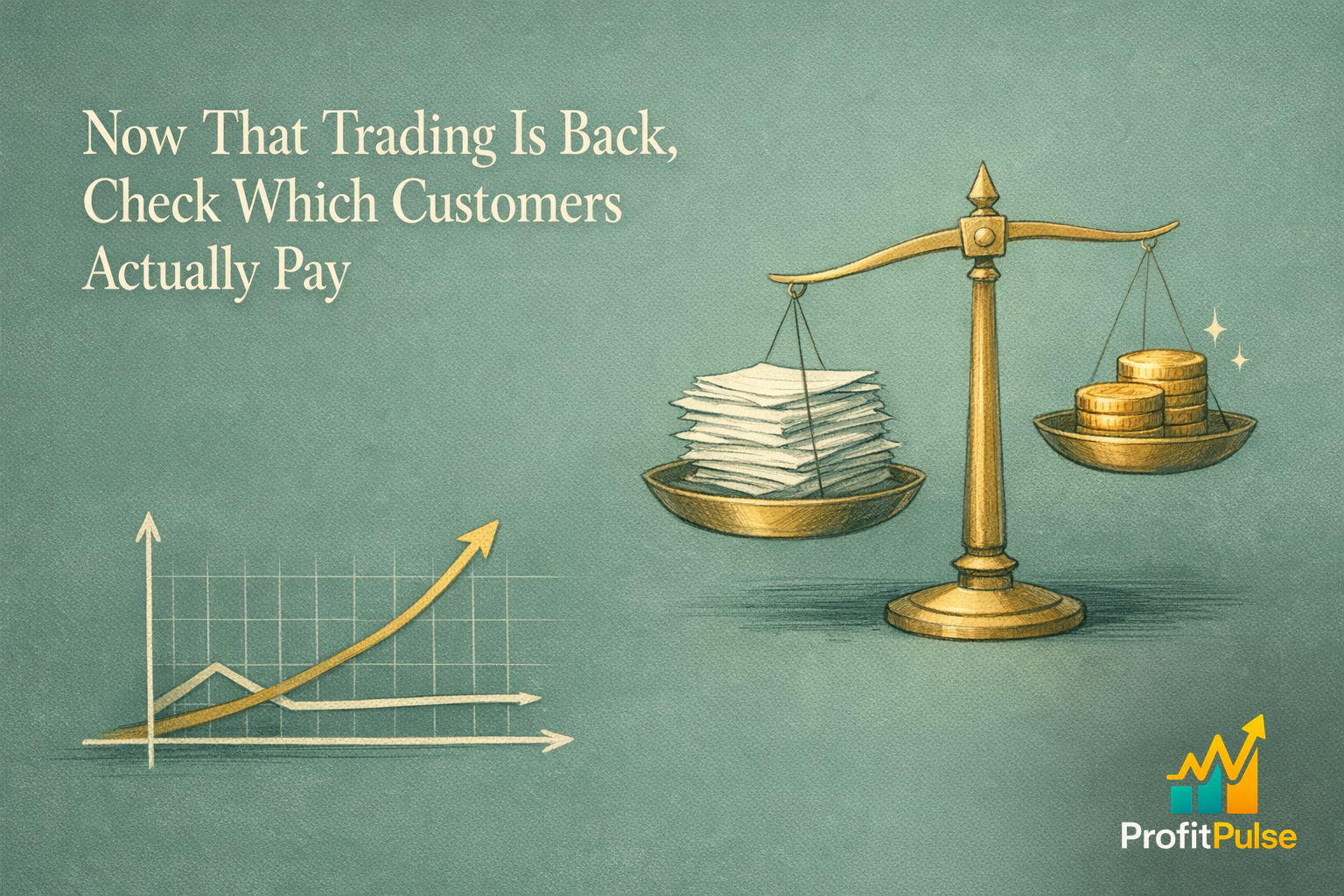
The first full trading month is the moment to rank customers by margin and effort to serve. The biggest revenue accounts are often not the most profitable, and acting on that gap lifts the bottom line.

Owners with rare headroom should aim their attention at the one or two margin levers that move the year, not a long list of resolutions that fade by March.

Year-end is the moment to rank every product or service line by margin contribution, separating the ones that made money from the ones that only made noise. A kill, fix or scale decision for the new year.