

Planning the EOFY Cash Crunch Before It Arrives
EOFY brings a predictable cash squeeze from tax, supplier runs and year-end spending. Modelling it in early May beats reacting in late June. Here is how to plan your June cash now.
EOFY brings a predictable cash squeeze from tax, supplier runs and year-end spending. Modelling it in early May beats reacting in late June. Here is how to plan your June cash now.

As EOFY approaches, the year-end is the moment to tidy the financials a future buyer will eventually read. Reliable numbers earn trust, and trust earns price. Here is where to start.

On Labour Day, a look at why recruitment and labour hire businesses carry a built-in cash gap, and how to fund the wait between paying contractors and being paid by clients.

Owners track the return on their effort but rarely on the capital tied up in stock, fit-out, equipment and marketing. How to review where capital sits against the return it earns, and where to redeploy it.

Rapid growth consumes cash through stock, wages and receivables before the new revenue lands. Profitable businesses still run out of money. How to fund growth deliberately rather than be surprised by it.

Vet practices often underprice the consult while diagnostics, surgery and retail subsidise it unevenly, masking where the margin really sits. How to read revenue and margin by service line.

Renewable installers ride strong demand while deposits, equipment costs and instalment timing create a working capital squeeze that growth makes worse. How to fund a growing pipeline without running dry.

Some customers cost more to serve than they pay. The discipline to let them go can lift profit more than winning new work. Here is how to find the loss-makers hiding inside healthy revenue.

Businesses trading across borders carry FX risk that can wipe out a quoted margin between order and payment. Few have a hedging policy worth the name. A simple treasury rhythm protects the margin.

Buyers score a business across eight readiness dimensions before they price it. Each one quietly moves the offer. Here is how to score yourself honestly before someone else does it for you.
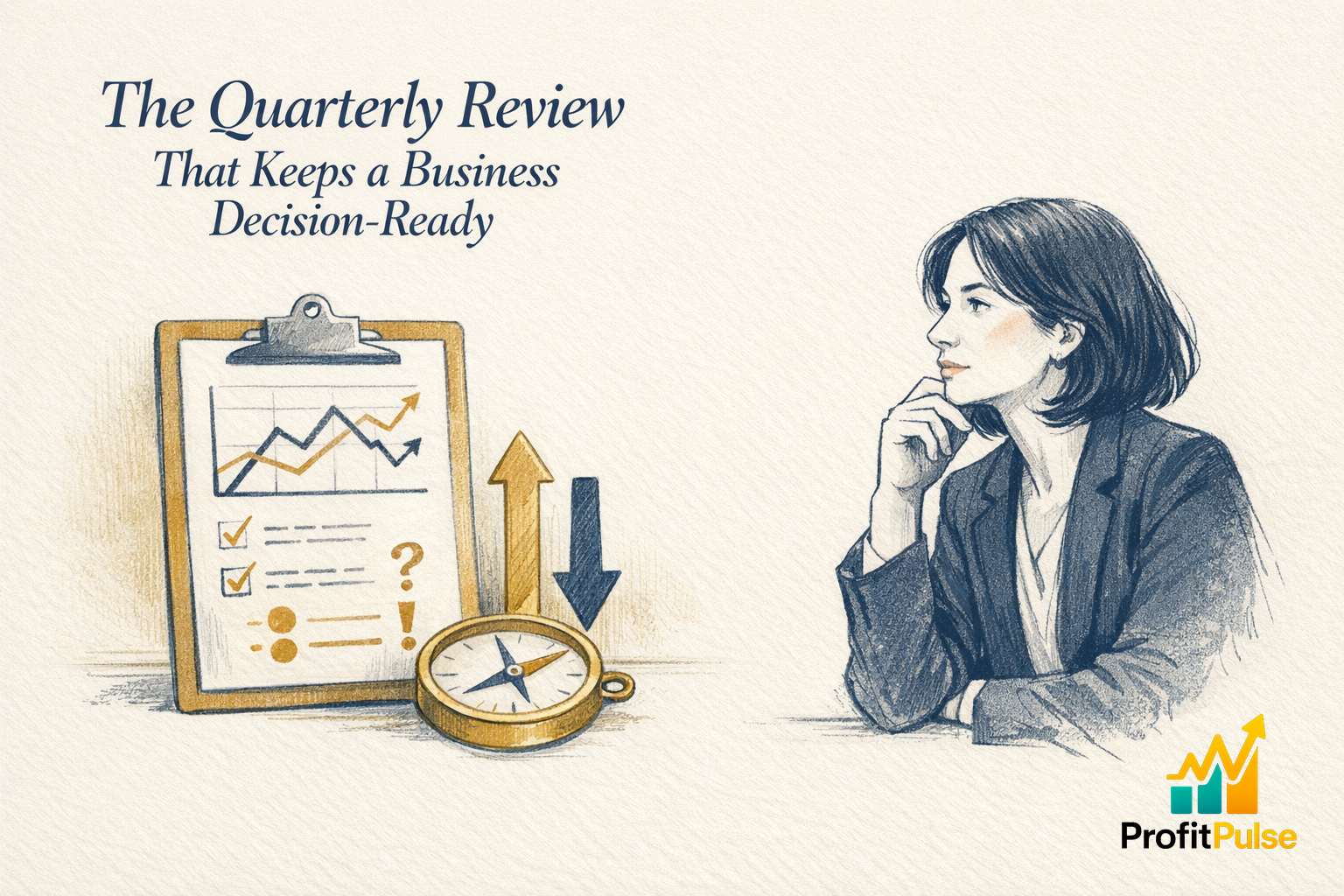
A disciplined quarterly review, variance against plan plus a short list of risks and opportunities, keeps a business steerable rather than reactive. It is the habit that separates planning from wishing.

Most businesses are sitting on cash they could release from debtors, inventory and supplier terms before ever approaching the bank. Three working capital levers to pull first, and how much each frees.

Dental profitability is decided by production per chair and the mix of treatment versus hygiene, not by how full the appointment book looks. A busy diary and a profitable one are different things.

Construction businesses can run profitable jobs on paper while progress claims, retentions and subcontractor payments open cash gaps that sink the quarter. Profit and cash are not the same number.

The choice between selling today and lifting value first comes down to a few measurable gaps. Owners often sell too early because they cannot see the upside they could build.

Aged care operators run on funded rates that leave little room. The difference between viable and not sits in staff cost ratios, occupancy and the real cost of care per resident.

Investor readiness is mostly about evidence, that the business can tell a clear story backed by numbers that hold up, long before any pitch. Preparation starts from credibility.

Technology businesses can buy revenue growth through spend while the unit economics, payback period and churn quietly decide whether the model actually works.

A careful price increase is the fastest lever on profit and far less risky than owners fear, when it is built on customer profitability and value rather than a flat percentage.

A forward cash view before quarter-end lets owners act while there is still time, rather than discovering a shortfall after the books close and options have narrowed.

Wellness owners hit a capacity ceiling and must choose between more staff, more space or better use of what they have. The capital decision should be weighed against return.

Transport businesses track revenue per load while the cost per kilometre, fuel volatility and fleet financing quietly decide the margin. A full cost view changes the picture.

Growth often pulls owners deeper into financial decisions they have no time for. Senior finance support is how they step back without losing control of the business.
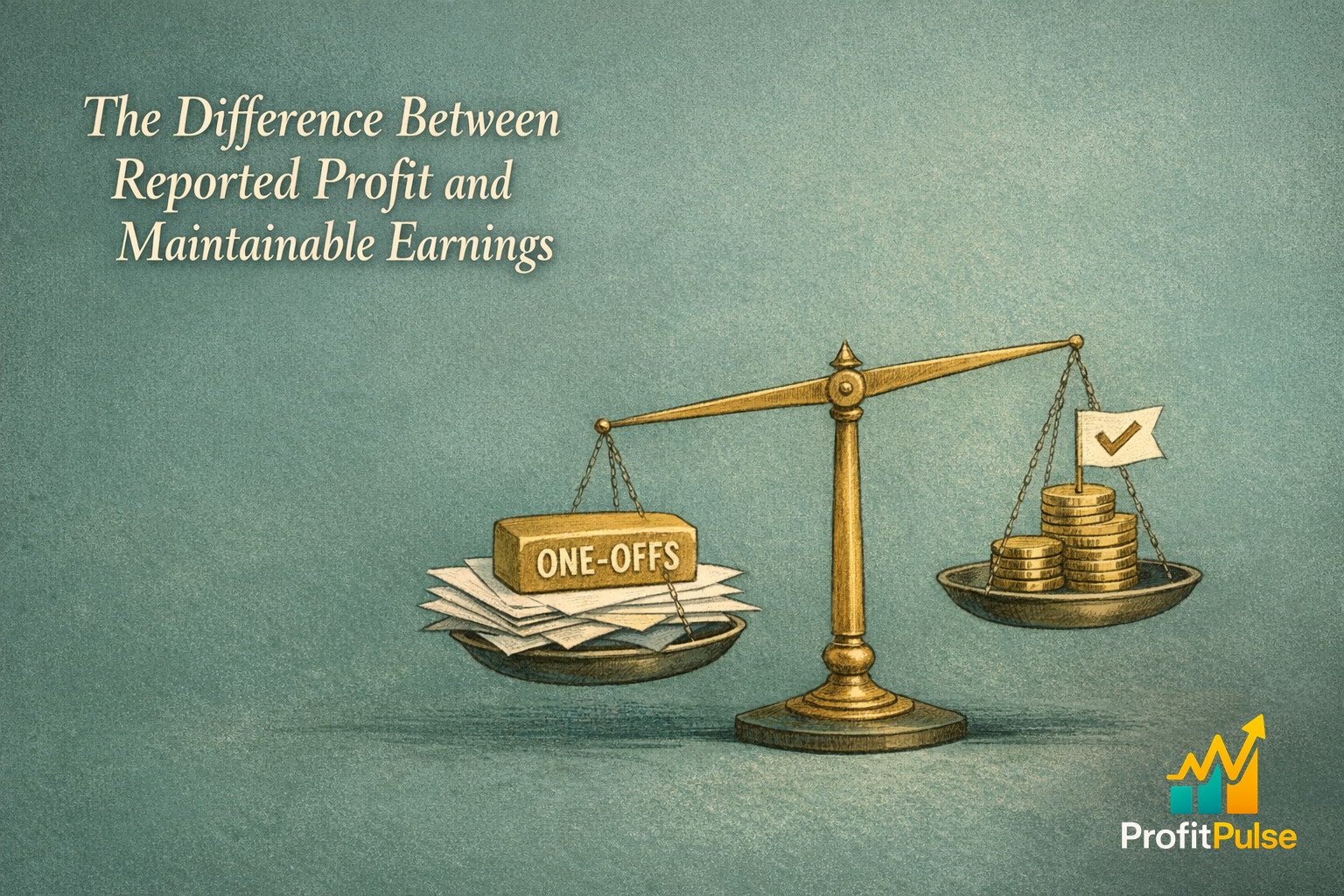
Buyers do not pay for last year’s profit. They pay for what the business can reliably repeat after one-off items and owner add-backs are normalised.

Producers often carry stale prices while materials, energy and freight have moved, eroding margin order by order. The fix is rebuilding prices from current input cost.