
Set the Financial Rhythm in January, for the Entire Year
The quiet start of the year is the best moment to install a monthly financial cadence, so the business runs on a rhythm for twelve months instead of reacting all year.
The quiet start of the year is the best moment to install a monthly financial cadence, so the business runs on a rhythm for twelve months instead of reacting all year.

Primary producers carry a year of input costs against income that lands in a few concentrated windows. That mismatch makes a season-long cash plan essential, not optional.
The slowest trading weeks of the year are exactly when a forward cash view matters most. Fixed costs keep running while revenue lags, so read the trough early.

New Year membership surges make every gym look healthy. The real signal sits in retention and revenue per member once the resolution wave fades by autumn.

A year-ahead plan built without knowing the current value of the business is missing its anchor. An honest valuation reframes which goals actually matter and where to start.

Producers heading into a new year often carry last year’s prices against this year’s input costs. Here is how to rebuild a price list from batch cost and yield before the first quarter’s orders lock in.
The balance sheet you carry into the new year shapes what you can borrow and on what terms, long before any application is made. Here is which year-end positions strengthen or weaken a future lending conversation.

The shutdown period drains cash while revenue stops. A simple plan for committed payments against expected receipts is the difference between a calm break and a January scramble.

Unsold festive stock is trapped cash, and clearing it well protects both margin and the January bank balance. Here is how to mark down with discipline rather than panic.

Year-end is the moment to rank every product or service line by margin contribution, separating the ones that made money from the ones that only made noise. A kill, fix or scale decision for the new year.

Tourism and accommodation operators earn a large share of the year’s profit in a short summer window, which makes rate discipline decisive. Here is why you protect rate rather than chase occupancy.

The value-lifting work before a sale, tidying contracts, reducing owner reliance and proving recurring revenue, takes years not months. The reflective December window is the right time to start the clock.

Festive bookings fill restaurants and bars while overtime, wastage and beverage cost creep erode the margin owners assume they are making. Here is how to hold the line through the peak.

The most useful end-of-year habit is capturing the financial lessons of the year before the break, so January planning starts from real evidence rather than memory.

Before you switch off for the year, you need a clear answer to one question: what will the bank balance look like in early January when wages and rent fall due against thin trading?

Food and drink producers hit peak production and ingredient spend just as retailer payment terms stretch over the holidays. Here is how to bridge the gap between paying now and being paid later.

The December lull and the January planning window both pull at refinance timing. Here is why the groundwork is best laid now, even if the deal itself lands later.

The slow stretch after the festive rush is when owners finally have headroom to ask what the business is worth. Here is why an indicative valuation belongs in your year-ahead planning.

Online retailers celebrate the Black Friday revenue spike while shipping, fees, discounts and returns quietly hollow out the margin. Reading contribution margin per order tells the real story.

Staffing the festive peak by feel rather than by trading pattern is where retailers lose the margin the season was meant to deliver. Rostering against sales by hour protects it.

Festive discounting can quietly erase a year of margin when owners cut price rather than clear slow stock. Discounting with intent protects gross margin through the busiest weeks.

An invoice left open in late November often sits unpaid until February. The weeks before the December shutdown are the best chance to clear the ledger and protect January cash.

Trades businesses win work on a sharp quote, then lose the margin to variations, rework and unbilled hours. Tracking job cost against quote is how a full summer diary actually banks profit.
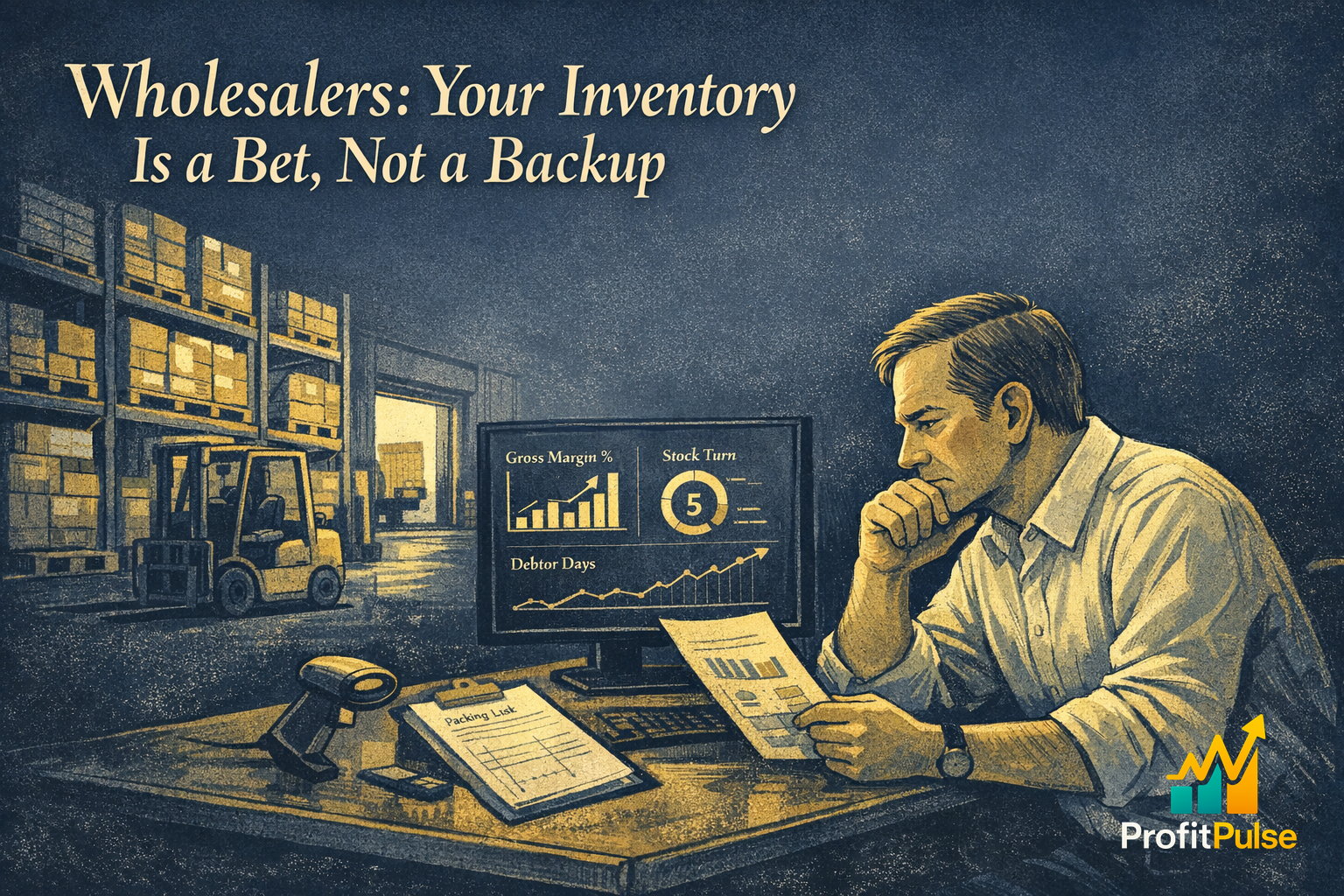
Heading into peak, distributors hold stock that feels like safety and behaves like a cost. Reading stockturn and gross margin return on inventory shows which shelves work for cash and which work against it.
November planning energy is real, but a plan that runs on optimism alone rarely survives contact with the year. A senior finance partner turns ambition into a costed plan.